PART 1: THE WOMAN WEARING MY COAT
He brought his mistress to the night they were handing me an award.
Then he called her his inspiration.
Not behind some locked hotel door. Not in a private booth where betrayal could hide beneath candlelight, whiskey, and whispered excuses.
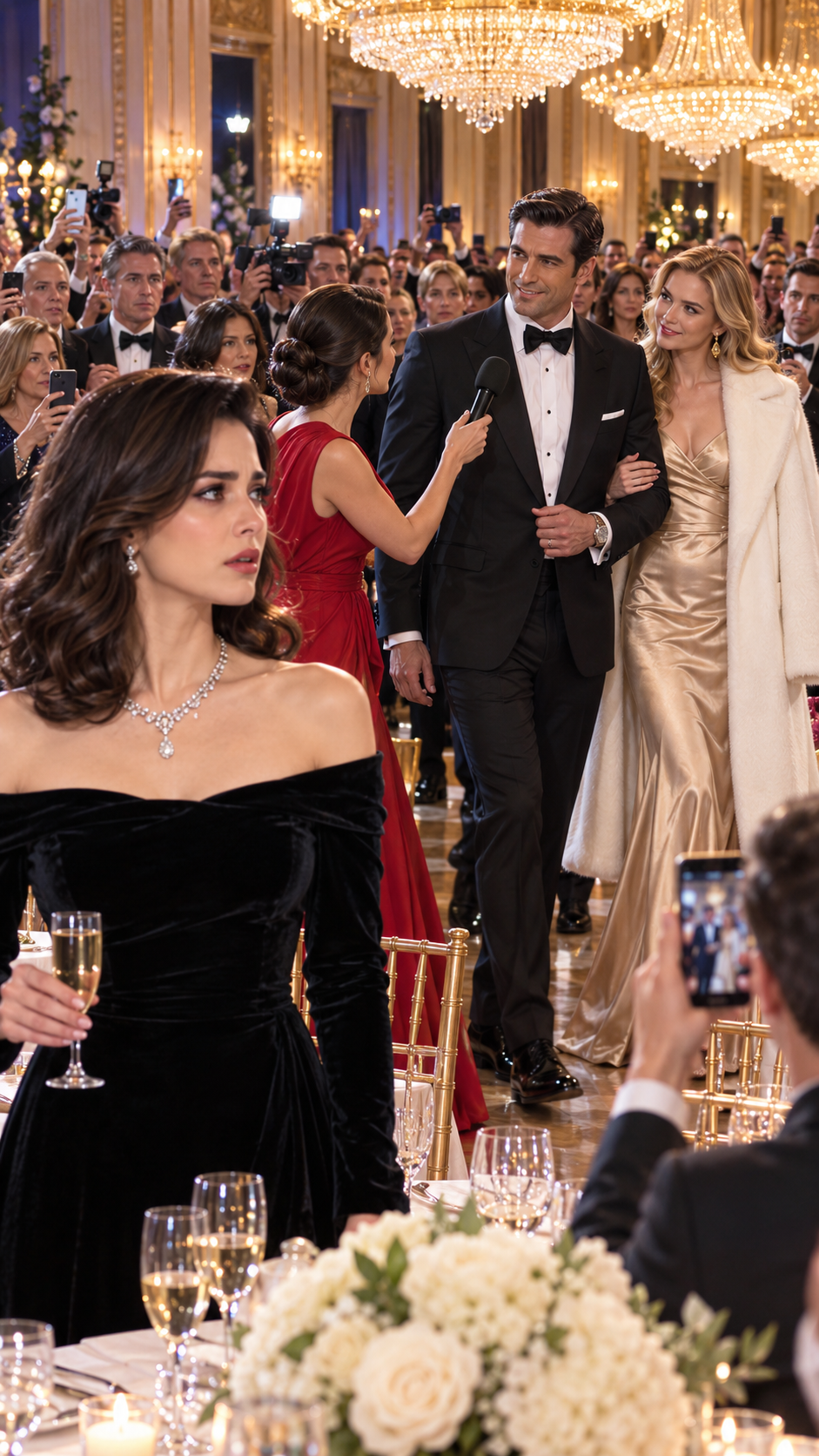
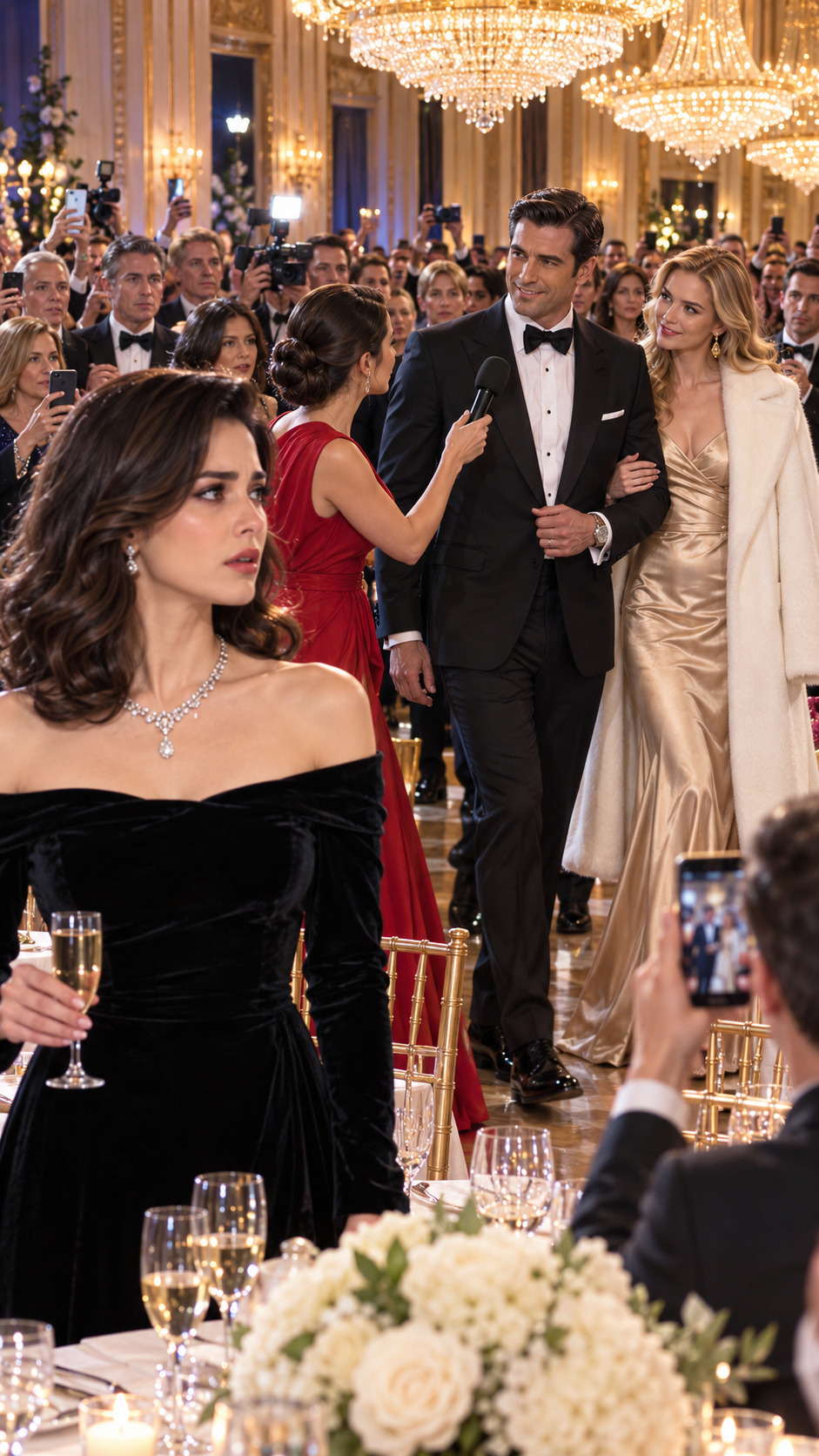
Daniel Whitmore did it beneath the crystal chandeliers of the Fairmont Grand Ballroom in Chicago, with reporters leaning forward, donors pretending not to stare, board members freezing mid-conversation, politicians smiling for cameras, and every phone in the room ready to turn my humiliation into tomorrow’s headline.
I stood twenty feet away in a black velvet gown, diamonds cool against my throat, waiting to receive Businesswoman of the Year for the company I had built from nothing.
Daniel walked in wearing the tuxedo I had tailored for him in New York.
And on his arm was Vanessa Crane.
Twenty-eight.
Pretty.
Polished.
Smiling like she had already taken my house, my husband, my name, and the final page of my story.
But what made the room blur for half a second was not her smile.
It was the white cashmere coat draped over her shoulders.
My coat.
The same designer coat Daniel had given me last Christmas.
I remembered that Christmas too clearly.
Snow against the windows of our Lake Forest house. A fire burning low. Daniel standing behind me as he settled the cashmere over my shoulders.
“You look like winter royalty,” he had whispered.
I had laughed.
I had kissed him.
And somewhere between Christmas and spring, he had apparently decided his queen could be replaced.
Now Vanessa wore that coat like a flag planted on conquered land.
A reporter moved first.
“Mr. Whitmore,” she asked, lifting her microphone, “who is the beautiful woman with you tonight?”
Daniel smiled.
That practiced investor smile.
The one I had watched him perfect in mirrors, boardrooms, charity dinners, and interviews where he pretended integrity was a family trait.
“This is Vanessa Crane,” he said smoothly. “The woman who changed my life.”
The ballroom went silent in the expensive way rich rooms go silent.
No one gasped.
No one shouted.
They simply inhaled through their noses, blinked slowly, and watched me bleed in public while pretending it was not entertainment.
Vanessa leaned closer to him.
Then she looked directly at me.
Another reporter, hungry now, asked, “Are you all attending together?”
Vanessa tilted her head.
“I hope Elise understands,” she said. “Sometimes men grow in directions their wives refuse to follow.”
That was the second knife.
The first was bringing her.
The second was trying to erase me at my own award night.
I did not scream.
I did not slap him.
I did not throw champagne across her stolen coat or run into the bathroom crying.
I simply lifted my glass toward them.
A toast.
Daniel’s expression changed for less than a second.
He knew me well enough to recognize that particular stillness.
What he did not know was why I was calm.
He thought I had discovered Vanessa recently.
He thought tonight was his surprise.
It wasn’t.
I had been waiting six months for this exact moment.
Six months earlier, I had been sitting at our kitchen island at 2:13 in the morning when Daniel’s tablet lit up.
He was upstairs sleeping.
I had been working.
That difference, according to him, was eventually supposed to become the explanation for everything.
I worked too much.
I was too ambitious.
I had forgotten how to be a wife.
I cared more about Whitmore Dynamics than my marriage.
Those would become his talking points.
But that night, none of them existed yet.
There was only a message glowing on his screen.
V: Tomorrow? Same room. I miss you.
I stared at it.
Then another message appeared.
And don’t forget my coat. Chicago is freezing.
I didn’t confront him.
That decision surprised even me.
For twenty-three years, Daniel had been the person I confronted life beside.
We had married when neither of us had much money. I founded Whitmore Dynamics from a rented office above a dental practice with two employees, one unreliable printer, and a line of credit I was terrified to use.
Daniel joined later.
He was good with people.
I was good with systems.
I built things.
He sold people on believing in them.
For years, we worked.
Then the company grew.
Then our house grew.
Then our invitations became embossed.
Then strangers began asking Daniel how he had built Whitmore Dynamics.
At first he corrected them.
“My wife built it.”
Later, he began saying, “We built it.”
Eventually, he stopped correcting anyone.
I noticed.
I just didn’t understand what it meant.
Until Vanessa.
The morning after I saw her message, I checked our personal accounts.
Nothing obvious.
Then I checked corporate expense summaries.
Still nothing.
Daniel was not stupid.
He had been our chief strategy officer for eleven years.
He understood approvals.
He understood internal controls.
More importantly, he understood which controls were designed by people who trusted him.
People like me.
So I did something I had never imagined doing to my husband.
I stopped trusting him.
Quietly.
Completely.
And I began looking.
Hotel receipts appeared first.
Then jewelry.
Then an apartment on Lake Shore Drive leased through a company called Crane Strategic Advisory.
Vanessa Crane’s company.
It had been created fourteen months earlier.
Three weeks after its incorporation, Whitmore Dynamics began paying it consulting fees.
No one in procurement remembered hiring Vanessa.
No department head could describe her work.
Yet the invoices kept coming.
Market positioning.
Executive consulting.
Client relationship development.
Words broad enough to mean anything.
Or nothing.
By the fourth month of my private review, I knew two things.
Daniel was sleeping with Vanessa.
And my husband had used company money to decorate his affair.
By the fifth month, I discovered something worse.
He was preparing to take my company.
It began with questions from board members that sounded almost caring.
“Elise, are you sleeping enough?”
“You’ve been carrying a lot.”
“Have you considered taking a sabbatical?”
Then I heard a sentence I had never used about myself repeated by three different people in the same week.
“Maybe you’re burned out.”
Burned out.
Daniel’s phrase.
I knew because he had said it to me during dinner one Sunday.
“You’re exhausted, Elise.”
“I’m busy.”
“No. You’re burned out.”
“I know the difference.”
He had stared at me across the table.
Then smiled.
Not warmly.
Patiently.
As if he were speaking to someone who could no longer be trusted to understand her own mind.
That smile frightened me more than Vanessa ever did.
So I waited.
I listened.
I copied nothing I was not authorized to access.
I asked our general counsel to commission an independent review of several irregular vendor payments without telling him why.
I instructed our audit committee chair to keep the inquiry confidential.
And I watched Daniel continue believing I knew nothing.
Then, three weeks before the gala, my assistant found a draft presentation left queued on a shared executive conference system.
The title was simple.
Leadership Transition Proposal.
My name appeared eleven times.
Unstable.
Overextended.
Emotionally volatile.
Increasingly unpredictable.
Potential reputational risk.
Daniel planned to recommend that I step down temporarily.
He would become interim CEO.
Vanessa’s consulting firm would receive an expanded strategy contract during the transition.
That was when the affair stopped being the center of the story.
I could survive a cheating husband.
What I could not ignore was a corporate officer misusing company funds and building a campaign to remove the founder who might discover it.
So I stopped thinking like a wife.
I started thinking like a CEO.
And tonight, Daniel had made one final mistake.
He brought Vanessa into my room.
When he finally reached my table, she hovered beside him with no assigned seat and too much confidence.
“Can we speak privately?” he asked.
“No.”
His jaw tightened.
“Elise, this is not the place.”
I smiled.
“You chose the place. I’m only respecting your decision.”
Vanessa’s smile flickered.
Daniel lowered his voice.
“Don’t embarrass yourself.”
That almost made me laugh.
Instead, I asked, “Is that what you think is happening?”
Before he could answer, the emcee’s voice filled the ballroom.
“And now, please welcome our Businesswoman of the Year… Elise Whitmore.”
Applause rose like thunder.
Daniel grabbed my wrist beneath the table.
“Whatever you think you know,” he whispered, “don’t do this publicly.”
I looked down at his hand.
Then at him.
“You should have asked for privacy before you brought an audience.”
I removed his fingers one at a time.
Then I walked onto the stage.
Past the chandeliers.
Past the donors.
Past the reporters.
Past the board members who suddenly seemed extremely interested in their champagne.
Every phone in the ballroom lifted.
I reached the microphone.
Behind me, the giant screen turned black.
Then the first file opened.
Daniel stopped breathing.
And for the first time that night, Vanessa stopped smiling.
PART 2: SIX MONTHS OF SILENCE
The first image on the screen was not a photograph of Daniel kissing Vanessa.
I had those.
I didn’t use them.
This was not going to be a jealous wife’s revenge slideshow.
Daniel would have survived that.
Men like him always have language ready for affairs.
Marriage is complicated.
We grew apart.
There were mistakes on both sides.
Please respect our privacy.
No.
I showed an invoice.
CRANE STRATEGIC ADVISORY
Executive Relationship Consulting
$42,500
A murmur moved through the ballroom.
I let it.
Then I smiled at the audience.
“Thank you for this award.”
My voice was steady.
That mattered.
Not because I wanted to look strong.
Because Daniel had spent weeks telling people I was unstable.
I wanted them to remember every second of my composure.
“Twenty-six years ago,” I continued, “Whitmore Dynamics began in a six-hundred-square-foot office with two folding desks, three clients, and more debt than good judgment.”
A few people laughed.
I knew exactly where Daniel was standing without looking.
“I’ve been fortunate,” I said, “to watch it become something much larger than I ever imagined. More than four thousand employees now depend on decisions made by our leadership. So when I was told I would receive this award, I thought about what leadership actually means.”
I clicked the remote.
Another invoice appeared.
$31,800.
Another.
$56,000.
Another.
$27,500.
The laughter died.
“Leadership,” I said, “means understanding that money entrusted to you is not yours simply because you know how to access it.”
Someone near the front whispered, “Oh, my God.”
Daniel started toward the stage.
Our general counsel, Margaret Hale, rose from her table.
She did not touch him.
She simply stepped into his path.
He stopped.
That told the room more than anything I could have said.
I clicked again.
The screen displayed a timeline.
Payments from Whitmore Dynamics to Crane Strategic Advisory.
Apartment lease dates.
Hotel charges.
Luxury purchases.
Expense authorizations.
The dates lined up with brutal simplicity.
I had spent weeks making sure they did.
“Over the past fourteen months,” I said, “Whitmore Dynamics paid $684,300 to Crane Strategic Advisory.”
The room erupted in whispers.
Vanessa’s face drained of color.
Daniel looked at her.
Not at me.
At her.
That was interesting.
I continued.
“The company has been unable to identify deliverables supporting a substantial portion of those payments.”
Daniel’s voice cut through the room.
“Elise.”
I looked at him.
He forced a smile.
“This is a misunderstanding.”
I had heard that sentence before.
From executives caught lying.
From vendors caught overbilling.
From managers caught falsifying reports.
A misunderstanding is what dishonest people call facts when the facts arrive before their explanation.
I turned back to the microphone.
“The independent audit committee will determine whether it is.”
That sentence changed the room.
Independent.
Audit.
Committee.
Three words Daniel had not expected.
He took another step.
“Elise, stop.”
Vanessa grabbed his arm.
He shook her off.
That was the first time I saw fear on her face.
Not humiliation.
Fear.
Because until then, Vanessa had believed this was about marriage.
Maybe Daniel had told her I would cry.
Maybe he had told her I would make a scene.
Maybe he had told her I was too proud to expose him publicly.
Whatever he had promised, he had not told her about the audit.
I clicked again.
A corporate authorization form appeared.
Daniel’s electronic approval sat at the bottom.
I zoomed in.
“Crane Strategic Advisory was repeatedly approved for payment by our chief strategy officer.”
I looked directly at my husband.
“Daniel Whitmore.”
Camera shutters exploded.
He stared at me with naked hatred.
It hurt.
That surprised me.
After six months of evidence, after the apartment, after Vanessa, after the board whispers, some part of me still remembered the twenty-six-year-old man who had once driven across three states because my car broke down and I was afraid.
That man had existed.
I needed him to have existed.
Otherwise, I had spent half my life loving a ghost.
But the man standing beneath the chandeliers was not him anymore.
Maybe success had changed Daniel.
Maybe resentment had.
Maybe he had always contained this version of himself and simply needed enough power to let it breathe.
I still don’t know.
What I know is that he looked at me and said, “You’re making a terrible mistake.”
I almost answered.
Then I saw Vanessa.
Her hand had slipped into her purse.
Her fingers moved quickly.
Texting.
To whom?
That was the moment I remembered something from the audit.
Several invoices from Vanessa’s company had been forwarded to accounting from a personal email address belonging to one of Daniel’s senior staff members.
I had assumed Daniel had instructed him.
Now I wondered whether Vanessa was warning him.
I continued my speech.
But I watched her.
“I won’t speculate tonight about intent,” I said. “I won’t conduct an investigation from a ballroom stage.”
Daniel laughed sharply.
“That’s exactly what you’re doing.”
I faced him.
“No. I’m explaining why, effective this evening, you have been placed on administrative leave pending an independent investigation.”
The ballroom exploded.
Daniel went completely still.
Vanessa whispered, “You said she couldn’t do that.”
The microphone caught her.
Not loudly.
But loudly enough.
Daniel turned toward her.
I heard the sentence.
So did half the front row.
And suddenly, for the first time, the audience understood there had been a plan before tonight.
I clicked the remote again.
The screen changed.
Not to another invoice.
To a page from the leadership transition proposal.
My name.
Highlighted.
Founder/CEO exhibits increasing emotional instability.
Then another line.
Recommend immediate temporary transfer of executive authority following awards gala.
A date appeared beneath it.
Tomorrow.
I looked at the board.
Three members lowered their eyes.
Two looked stunned.
One—Richard Calloway—went pale.
Richard had asked me two weeks earlier whether I had considered “taking time for myself.”
Now I knew where he had gotten the language.
“Daniel,” I said quietly, “would you like to explain why a proposal to remove me as CEO was prepared before tonight?”
His face hardened.
“For God’s sake, Elise. Because look at you.”
There it was.
The trap.
He spread his hands toward the screen.
“You’re using a charity gala to attack your husband.”
“No.”
“You’ve been paranoid for months.”
“No.”
“You’ve barely slept. You question everyone. You think people are conspiring against you.”
A few people shifted.
Daniel heard it.
He saw his opening.
And he took it.
“This is exactly what I’ve been trying to tell the board.”
My heart started pounding.
Not because I doubted myself.
Because I realized how carefully he had constructed this.
If I became angry, I proved him right.
If I cried, I proved him right.
If I shouted about the affair, I became the hysterical wife he had described.
He had built a cage out of my possible reactions.
So I did the one thing he had not prepared for.
I stepped away from the microphone.
I walked to the edge of the stage.
And I looked directly at Margaret.
“Would you please explain the process?”
She stood.
Margaret Hale was sixty-three, silver-haired, terrifyingly precise, and incapable of making a sentence more emotional than absolutely necessary.
Perfect.
“The review was initiated through the audit committee,” she said. “The CEO did not conduct it personally. External forensic accountants were retained. The preliminary findings shown tonight have been independently verified to the extent stated.”
Daniel’s face changed.
Margaret continued.
“Mr. Whitmore was placed on administrative leave by authority of the board’s emergency governance provisions approximately forty minutes ago.”
Silence.
Daniel looked toward Richard.
Richard did not move.
Then Daniel looked at another board member.
Nothing.
Another.
Nothing.
His empire disappeared from his face one person at a time.
He had expected tomorrow.
I had acted tonight.
He turned back to me.
“You planned this.”
“Yes.”
The word felt clean.
Vanessa whispered, “Daniel, let’s go.”
He ignored her.
“You planned to humiliate me.”
I shook my head.
“I planned to protect my company.”
“Your company?”
His voice rose.
Finally.
There it was.
The resentment beneath everything.
“Your company. Your award. Your stage. Your name on every article. Have you ever once considered what it was like standing beside you for twenty years while everyone treated me like your accessory?”
The room became painfully still.
I stared at him.
And suddenly I understood something the hotel receipts had never explained.
Vanessa wasn’t the beginning.
She was the permission.
Daniel had not simply wanted another woman.
He had wanted another version of himself.
One in which he was the brilliant one.
The powerful one.
The man at the center.
Vanessa gave him that reflection.
I had given him partnership.
Apparently, he had come to experience partnership as humiliation.
I swallowed.
Then said, “If you wanted to leave my shadow, Daniel, you could have walked away.”
His eyes flashed.
“You wouldn’t understand.”
“I understand perfectly.”
I looked at Vanessa.
“You wanted my husband.”
Then I looked back at Daniel.
“You wanted my chair.”
I clicked the remote.
“And you used company money to pursue both.”
The next document appeared.
Vanessa made a small sound.
Because this one contained her signature.
PART 3: THE SIGNATURE SHE COULDN’T EXPLAIN
The document was a consulting certification.
Three pages.
Nothing dramatic to look at.
No photographs.
No romantic messages.
No hotel room numbers.
Just legal language and a signature at the bottom.
Vanessa Crane.
She stared at it.
I remembered seeing it for the first time in Margaret’s office.
“What am I looking at?” I had asked.
Margaret slid the document toward me.
“A quarterly vendor certification.”
“And?”
“She certified that Crane Strategic Advisory had no undisclosed personal relationship with any Whitmore Dynamics executive responsible for approving its invoices.”
I had read the sentence twice.
Then a third time.
Daniel had not merely hidden an affair from me.
Vanessa had signed a company document denying the conflict.
That mattered.
It mattered more than lipstick on a collar.
More than photographs.
More than my coat.
Back in the ballroom, I enlarged the relevant paragraph.
Vanessa stepped away from Daniel.
“I didn’t know what that was.”
Her voice was barely audible.
I heard it anyway.
“So you signed it without reading it?” I asked.
Daniel moved toward her.
“Don’t answer.”
That was the wrong thing to say.
Every attorney in the room seemed to notice at once.
Vanessa noticed too.
She looked at him.
“What?”
“Don’t say anything.”
“You told me it was routine.”
“Vanessa.”
“You said everyone signed those.”
Daniel reached for her arm.
She stepped back.
For the first time all evening, she looked twenty-eight.
Not polished.
Not victorious.
Just frightened.
I felt no satisfaction in that.
She had walked into my award night wearing my coat and insulted me in front of cameras. I wasn’t going to pretend she was innocent.
But I could see the structure now.
Daniel had lied to both of us differently.
To me, he said Vanessa was a consultant.
To Vanessa, he said I was unstable and nearly gone.
To the board, he said I was incapable of leading.
To accounting, he said her invoices were legitimate.
To himself, I suspect he said he deserved all of it.
Different lies.
Same purpose.
Control.
I returned to the microphone.
“The audit committee will handle the rest. I won’t.”
Then I closed the presentation.
The screen went black.
People seemed confused.
They expected more.
They wanted blood.
They wanted texts.
Photographs.
Sex.
Tears.
I had all of those things available.
But this was where Daniel and I were different.
He had brought my private humiliation into public because he wanted spectacle.
I had brought his corporate conduct into public because he had made the company’s governance part of his attack.
I would not give strangers the bedroom.
That belonged to my divorce attorney.
I looked around the ballroom.
“This evening was supposed to celebrate leadership,” I said. “I’m sorry that it became something else. But I would be more ashamed to accept an award for leadership while hiding information our employees, investors, and board have a right to examine.”
No one moved.
“So I will say only this. Titles do not create integrity. Marriage does not create ownership. And loyalty does not require blindness.”
I looked at Daniel one final time.
“I learned that later than I should have.”
Then I lifted the award from its stand.
“Thank you.”
The applause began somewhere near the back.
One person.
Then another.
Then the room rose.
Not everyone.
But enough.
I didn’t smile.
I didn’t feel victorious.
I felt like someone had opened my chest, removed something vital, and expected me to pose for photographs afterward.
I walked offstage.
Margaret met me at the stairs.
“You did well.”
“Is he leaving?”
“Security is handling it.”
I nodded.
Then Vanessa appeared.
Alone.
The white coat was still around her shoulders.
“Elise.”
Margaret stepped between us.
I touched her arm.
“It’s fine.”
It wasn’t.
But I needed to hear whatever Vanessa had come to say.
She stopped several feet away.
Up close, her makeup couldn’t hide how pale she was.
“I didn’t know about the audit.”
“I assumed.”
“I didn’t know he was using company money for everything.”
That made me look at her.
“Everything?”
Her lips parted.
Then closed.
“Daniel told me the apartment was his.”
“It wasn’t.”
“He said it was an executive residence.”
“It was leased through your company.”
Her eyes filled with panic.
“I didn’t arrange that.”
“But you signed the lease.”
“He told me to.”
There are moments when anger becomes almost cold enough to touch.
This was one.
“You are twenty-eight years old, Vanessa. Not eight.”
She flinched.
Good.
“I know.”
“Do you?”
Her face hardened slightly.
“You think I came here to apologize?”
“No. I think you came here because Daniel told you not to answer questions and now you’re wondering how much trouble you’re in.”
She stared at me.
Then glanced over her shoulder.
Daniel was arguing with two security officers near the ballroom doors.
Even then, he looked furious rather than ashamed.
Vanessa turned back.
“He told me you were leaving the company.”
“I know.”
“He said the board had already decided.”
“I know.”
“He said your marriage had been over for years.”
That one hurt.
I hated that it did.
“He told me you lived separate lives.”
“We had breakfast together yesterday.”
She blinked.
“He told me he slept in the guest room.”
“He slept beside me Sunday.”
Her mouth tightened.
I could see her rearranging the past in real time.
Every weekend he couldn’t come.
Every call he ended abruptly.
Every promise with no date attached.
I knew that rearrangement.
I had spent six months doing the same thing.
“He said after tonight you’d understand,” she whispered.
“Understand what?”
“That it was over.”
I looked at her coat.
My coat.
“Apparently he wanted visual aids.”
She actually looked ashamed then.
Her fingers touched the cashmere.
“I didn’t know this was yours.”
That, strangely, I believed.
Because it was exactly the kind of thing Daniel would do.
Give one woman something that belonged to another and call himself generous.
Vanessa started removing it.
“Keep it.”
She froze.
“I don’t want it back.”
I walked away.
“Elise.”
I stopped.
When I turned, she was holding the coat against herself.
“There’s something else.”
Margaret and I exchanged a glance.
“What?”
Vanessa looked toward Daniel again.
“He told me tomorrow wasn’t just about replacing you.”
My stomach tightened.
“What was it about?”
She swallowed.
“He said once he became interim CEO, there were documents you wouldn’t be able to stop.”
“What documents?”
“I don’t know.”
“Vanessa.”
“I swear.”
She stepped closer.
“He kept saying the transition had to happen before Friday.”
Friday.
Three days away.
“Why Friday?”
“I don’t know.”
Then she said the sentence that kept me awake for the next thirty-six hours.
“He said after Friday, even if you came back, it wouldn’t matter.”
PART 4: WHAT DANIEL NEEDED ME NOT TO SEE
I left my own award gala through a service corridor.
Not because I was ashamed.
Because there were forty reporters outside the main entrance and I had already given the public enough of my marriage for one night.
Margaret came with me.
My chief financial officer, Thomas Reed, joined us in the car.
No one spoke until the doors closed.
Then I said, “Friday.”
Thomas nodded.
“I heard.”
“What happens Friday?”
“Nothing I’m aware of.”
“Find out.”
He opened his laptop before the car started moving.
By midnight, we were in the executive conference room at Whitmore Dynamics.
I had changed out of my gown.
The diamonds were gone.
My hair was tied back.
My award sat on a side table beside three cups of coffee no one had finished.
Daniel’s building access had been suspended.
His corporate accounts had been locked.
But if he had prepared something before tonight, it could already be moving.
Thomas searched scheduled transactions.
Margaret reviewed pending agreements.
I went through the executive approval calendar.
At 1:47 a.m., Thomas said, “Elise.”
I looked up.
His expression told me before his words did.
“I found something.”
He turned the laptop toward me.
A proposed strategic services agreement.
Crane Strategic Advisory.
Three-year term.
Minimum guaranteed value: $4.8 million.
I stared at the number.
“Who approved this?”
“It isn’t approved.”
“Then why Friday?”
“Because the execution window opens Friday if there’s an authorized change in executive control.”
My skin went cold.
Daniel had planned ahead.
If I stepped down after the gala and he became interim CEO, the contract could be activated under authority he expected to possess.
“Can he execute it now?”
“No.”
“Can anyone?”
“Not without board authority.”
I exhaled.
Then Thomas said, “There’s more.”
Of course there was.
The agreement included a termination penalty.
If activated and later canceled, Crane Strategic Advisory could claim a substantial fee.
Daniel had been preparing to lock Vanessa’s company into Whitmore Dynamics before I could return.
Not forever.
He didn’t need forever.
He needed one signature.
One Friday.
One moment when my authority belonged to him.
I sat back.
For six months, I had believed I understood the betrayal.
I hadn’t.
The affair was real.
But it had also become infrastructure.
A private relationship turned into a financial arrangement.
A financial arrangement turned into a governance plan.
And the governance plan depended on making me look incapable.
“Why?” I whispered.
Thomas looked at me.
I wasn’t asking him.
Why wasn’t a business question.
It was the question every betrayed person eventually asks even after learning that answers rarely help.
Why wasn’t I enough?
Why wasn’t our life enough?
Why wasn’t his position enough?
Why wasn’t being loved enough?
Margaret sat beside me.
“Don’t confuse motive with justification.”
I looked at her.
“He resented me.”
“Yes.”
“I didn’t see it.”
“You saw pieces.”
“I ignored them.”
“You trusted your husband.”
I almost laughed.
“That sounds worse when you say it out loud.”
“No. It sounds normal.”
I looked through the glass wall toward the dark offices beyond us.
Four thousand employees.
Families.
Mortgages.
College tuition.
Health insurance.
People whose lives were connected to decisions made in this building.
Daniel had expected me to be too devastated by Vanessa to see what he was doing behind her.
That might have been the most insulting part.
He thought heartbreak would make me stupid.
It didn’t.
It made me tired.
There is a difference.
At 3:10 a.m., I found the clue that finished everything.
It wasn’t hidden.
That was almost funny.
Daniel had placed it on my calendar himself.
Three weeks earlier, he had scheduled a private board strategy session for Friday morning.
I had declined because I was supposed to be in Boston.
Daniel knew that.
He had arranged the Boston meeting.
I stared at the calendar invitation.
Then remembered something else.
“Thomas.”
He looked up.
“The Boston acquisition meeting.”
“What about it?”
“Who requested the date change?”
He checked.
His eyebrows rose.
“Daniel.”
There it was.
The truth had been sitting in front of me from the beginning.
Daniel had arranged for me to be out of town on Friday.
He had prepared the transition proposal for the morning after the gala.
He had spent weeks convincing board members I was exhausted.
He had prepared a multimillion-dollar agreement benefiting his mistress’s company.
He had expected my public humiliation to do the rest.
If I reacted badly at the gala, he could point to my behavior.
If I disappeared, he could call me unstable.
If I confronted him privately, he could deny everything until Friday.
And if I discovered the contract later?
It would already be signed.
I closed my eyes.
For a moment, I saw him at thirty.
Daniel barefoot in our first apartment, eating Chinese food from a carton because we couldn’t afford dining chairs.
Daniel at thirty-seven, holding our first major contract in both hands and shouting so loudly the neighbors complained.
Daniel at forty-four, sitting beside me in a hospital waiting room when my father died, his hand wrapped around mine for seven straight hours.
Daniel at fifty-two, telling me I was burned out.
How do you grieve someone who is still alive?
I still don’t have a good answer.
My phone vibrated.
Daniel.
His first call since the gala.
I let it ring.
Then it stopped.
A message appeared.
You have no idea what you’ve done.
Another.
Vanessa is lying to save herself.
Another.
We need to talk before lawyers destroy this family.
I stared at that last sentence.
This family.
Interesting.
The family had apparently survived the affair, the stolen money, the attempted corporate takeover, and the mistress arriving at my award night.
Lawyers, however, were where Daniel drew the line.
I typed four words.
Speak through my attorney.
Then I blocked him.
At 8:00 that morning, the emergency board meeting began.
Daniel attended remotely with counsel.
Vanessa did not attend.
The independent auditors presented their preliminary findings.
I barely spoke.
I didn’t need to.
Numbers have a way of becoming louder when people stop shouting over them.
The board voted unanimously to continue Daniel’s suspension.
Then Richard Calloway cleared his throat.
“Elise, I owe you an apology.”
I looked at him.
“Yes.”
He seemed surprised.
Perhaps he expected me to rescue him from discomfort.
I didn’t.
He continued.
“Daniel told several of us you were having difficulty making decisions.”
“And you believed him.”
“I believed he was concerned about you.”
“Did you ask me?”
Richard looked down.
“No.”
“Did you review my performance?”
“No.”
“Did you examine the company’s results?”
“They were strong.”
“Did you speak to senior leadership?”
“No.”
“Then what exactly did you believe?”
Silence.
Finally he said, “A husband speaking about his wife.”
I nodded.
“That was your mistake. This wasn’t a husband speaking about his wife. This was an officer of the company making claims about its CEO while seeking her authority.”
No one spoke.
I looked around the table.
“I don’t need loyalty from this board.”
Several faces tightened.
“I need governance.”
That landed harder.
“If you believe I should be removed, remove me because of evidence. Performance. Judgment. Results. Do not remove me because a man who benefits from my removal tells you I’m emotional.”
Richard nodded slowly.
“You’re right.”
Across the screen, Daniel laughed.
Everyone turned.
“You’re enjoying this, aren’t you, Elise?”
I looked at him.
“No.”
“You’ve wanted to punish me from the beginning.”
“No.”
“You expect everyone to believe this is about corporate governance?”
I leaned toward the camera.
“I expect you to explain the $4.8 million agreement.”
For the first time, Daniel had nothing ready.
His attorney turned toward him.
That was the moment I knew.
Daniel had not told his own lawyer everything.
His counsel muted the call.
The screen remained on.
We watched them arguing without sound.
Then the feed disconnected.
Thomas exhaled.
Margaret closed her folder.
And I realized the confrontation I had imagined for six months was over.
There would be investigations.
Lawyers.
Divorce filings.
Forensic accounting.
Possibly years of consequences.
But emotionally?
The marriage had ended in that silent video square.
Not when he brought Vanessa to the gala.
Not when she wore my coat.
Not even when I discovered the affair.
It ended when Daniel was finally confronted with what he had done and still believed the greatest injustice was that I had stopped him.
PART 5: WHAT WAS LEFT AFTER THE TRUTH
Three months later, I stood in the kitchen of the Lake Forest house with a real estate agent.
The room looked smaller without Daniel in it.
Or maybe I had simply spent too many years making him larger than he was.
“We could list next week,” she said.
I nodded.
“Do it.”
“You’re sure?”
I looked toward the fireplace.
Christmas.
White cashmere.
Winter royalty.
“Yes.”
I was sure.
The independent investigation concluded that Daniel had repeatedly failed to disclose his relationship with Vanessa while participating in approvals connected to her company. It also identified unsupported consulting charges and confirmed the proposed multimillion-dollar agreement had been prepared for execution following the leadership transition he had advocated.
The board terminated him.
Crane Strategic Advisory’s remaining contracts were canceled.
The company’s attorneys handled the financial recovery process.
I handled something harder.
My life.
Vanessa cooperated with the investigation.
I learned that through attorneys, not from her.
She turned over messages, drafts, and records Daniel had sent her.
Some supported what we already knew.
Others showed how thoroughly he had manipulated the story around me.
He had told her I planned to retire.
That our marriage existed only for appearances.
That the board wanted him in charge.
That I had become irrationally possessive of the company.
That once he was CEO, they would finally be able to live openly.
Vanessa was responsible for her choices.
I never changed my mind about that.
She had signed documents she should have read.
She had accepted benefits she should have questioned.
She had walked into a ballroom knowing she was sleeping with my husband and publicly mocked me.
But Daniel had given her a version of reality designed to make every selfish choice feel inevitable.
He had done the same thing to himself.
That was his talent.
He could turn desire into entitlement.
Then entitlement into justification.
I never spoke to Vanessa again.
I didn’t need to.
The last image I had of her was from the gala.
Not the entrance.
Not the smile.
Not even my coat.
It was the moment she looked at Daniel after learning about the audit.
The moment she realized the man who had promised her a future had also placed her name on documents that might destroy it.
I recognized that look.
It was the look of discovering you were not his exception.
You were simply the next person he had lied to.
My divorce from Daniel was not cinematic.
There were no screaming matches in marble courthouses.
No dramatic final kiss.
No secret reconciliation.
Real endings are often less theatrical than betrayals.
There were conference rooms.
Documents.
Asset schedules.
Lawyers.
Signatures.
Twenty-three years reduced to pages requiring initials at the bottom.
Daniel tried twice to speak to me privately.
I refused the first time.
I agreed the second.
Not because he deserved it.
Because I wanted to know whether I could sit across from him without wanting an explanation.
We met in a private conference room at my attorney’s office.
He looked older.
Not ruined.
Not broken.
Just diminished.
For years, Daniel had filled rooms effortlessly.
That afternoon, he seemed unable to fill his own suit.
“Elise.”
I sat across from him.
“Daniel.”
He looked at me for a long time.
Then said, “I loved you.”
Past tense.
I expected pain.
What I felt was relief.
“I know.”
His eyes narrowed.
“You know?”
“I believe you did.”
He looked away.
“I still do.”
“That isn’t enough.”
“I made mistakes.”
I almost smiled.
“Mistakes?”
He rubbed both hands over his face.
“What do you want me to call them?”
“Whatever lets you sleep.”
His hands dropped.
“You think I wanted to destroy you.”
“You tried to remove me from my company by convincing people I was mentally unfit.”
“I thought you needed to step away.”
“You prepared a contract for Vanessa’s company.”
He said nothing.
“You arranged for me to be in Boston.”
Nothing.
“You scheduled the board meeting while I would be gone.”
“Elise—”
“You didn’t think I needed rest. You needed my chair empty.”
His face hardened.
And there he was again.
The man from the ballroom.
“You never made room for me.”
I stared at him.
“Excuse me?”
“Everything was Elise Whitmore. Elise founded it. Elise saved it. Elise made the deal. Elise won the award. Do you know what it’s like to be married to someone the entire world thinks is more important than you?”
For years, I might have answered gently.
I might have apologized for success as though it were an affair of my own.
Not anymore.
“You had a title.”
He looked away.
“You had money.”
Silence.
“Influence. Respect. A home. A marriage. A seat at every table I sat at.”
“That isn’t the same as having something that’s yours.”
“Then you should have built something.”
He looked at me.
The sentence hung between us.
Cruel?
Perhaps.
But true.
“You wanted what I had built,” I said. “And instead of building your own, you decided I had stolen yours.”
His eyes reddened.
“You really believe I contributed nothing?”
“No.”
That surprised him.
“I believe you contributed a great deal. That’s what makes this so sad.”
He said nothing.
“You were valuable, Daniel. You just couldn’t tolerate not being the most valuable person in the room.”
His mouth tightened.
For a moment, I thought he might shout.
Instead he whispered, “Vanessa left.”
I hadn’t known.
I felt nothing.
He studied my face, perhaps hoping for satisfaction.
There was none.
“I’m sorry,” I said.
He laughed bitterly.
“No, you’re not.”
“No. But I’m sorry you still think that matters to me.”
He looked down.
Then he said something I will probably remember for the rest of my life.
“I didn’t think you’d fight back.”
I stared at him.
There it was.
The entire marriage.
The entire betrayal.
The entire plan.
Reduced to six words.
He had mistaken patience for weakness.
Compromise for dependence.
Privacy for fear.
Grace for surrender.
“Why?” I asked.
He looked at me.
“Why didn’t you think I’d fight?”
His answer came quietly.
“Because you always protected me.”
I nodded.
That one hurt.
Because it was true.
For years, I had protected Daniel.
From embarrassment.
From mistakes.
From conflicts with executives.
From consequences.
Sometimes because I loved him.
Sometimes because protecting him felt like protecting us.
And somewhere along the way, he had begun to believe my protection was proof I could never survive without the marriage it preserved.
I stood.
He looked up.
“Is that it?”
“Yes.”
“Elise.”
I reached the door.
“What?”
He swallowed.
“If I hadn’t brought Vanessa that night… would you still have done it?”
I considered lying.
I didn’t.
“Yes.”
His face fell.
“The audit was already underway. The board action was already prepared.”
“Then why the stage?”
I thought of the ballroom.
The coat.
The reporters.
His hand around my wrist.
Don’t do this publicly.
“You chose the stage,” I said. “I only refused to leave it.”
Then I walked out.
Six months after the gala, I stood on another stage.
Smaller this time.
No crystal chandeliers.
No husband.
No mistress.
No stolen coat.
Just several hundred employees gathered for our annual leadership meeting.
Whitmore Dynamics had survived.
There had been ugly headlines.
Questions from investors.
Rumors.
Legal costs.
Awkward conversations.
But the company had survived because companies, unlike marriages, can sometimes recover when people stop protecting the wrong things.
We strengthened our conflict-of-interest rules.
Changed executive approval procedures.
Expanded whistleblower protections.
Separated certain financial authorities that had once depended too heavily on trust.
Including mine.
Especially mine.
Leadership is not proving that you are the only person who can be trusted.
Leadership is building something that does not collapse when someone cannot be.
When I finished speaking, an employee raised her hand.
She was young.
Maybe twenty-five.
“Can I ask something personal?”
The room laughed.
I smiled.
“You can ask.”
She hesitated.
“At the gala… how were you so calm?”
The room became quiet.
For months, strangers had asked me versions of that question.
How did you stay calm?
How did you know?
How did you survive?
People wanted a secret.
Some technique.
Some perfect sentence women could carry into betrayal like a weapon.
I didn’t have one.
“I wasn’t calm,” I said.
She looked surprised.
“I was furious. I was humiliated. I was heartbroken. I wanted to disappear.”
“Then how did you do it?”
I thought about that.
Then answered honestly.
“Because feelings aren’t instructions.”
The room stayed silent.
“You can be terrified and still act. You can be heartbroken and still think. You can love someone and still refuse to let them destroy you.”
I paused.
“And sometimes the strongest thing you can do is stop protecting the person hurting you.”
Afterward, people came forward to speak with me.
I shook hands.
Answered questions.
Took photographs.
Then the room emptied.
I remained alone on the stage for a moment.
My phone vibrated.
A news alert.
The final civil settlement involving the disputed vendor payments had been approved.
I read the headline once.
Then turned off my phone.
For months, I had imagined justice would feel like triumph.
It didn’t.
It felt quiet.
Like closing a door and realizing you no longer needed to stand behind it listening.
I walked toward the exit.
Outside, Chicago was covered in snow.
The air was sharp enough to hurt my lungs.
A car waited at the curb.
My assistant hurried toward me.
“You forgot your coat.”
She held out a dark wool coat I had bought myself.
I slipped my arms into it.
Warm.
Simple.
Mine.
For a second, I thought about the white cashmere coat.
I wondered where it had ended up.
Vanessa might have thrown it away.
Daniel might have kept it.
It might still be hanging in some closet, carrying the memory of two women who had once believed the same man’s promises.
I realized I didn’t care.
That coat belonged to a life in which I had mistaken being chosen for being valued.
I understood the difference now.
My assistant opened the car door.
Before I got in, I looked back at the building.
My name was nowhere on the outside.
I had made that decision years ago.
Daniel used to complain about it.
He thought founders should put their names on things.
Maybe he was right.
Maybe he wasn’t.
It no longer mattered.
I knew what I had built.
I knew what I had survived.
And I knew something Daniel had never understood.
Power isn’t walking into a room with someone else’s coat on your mistress’s shoulders.
It isn’t making people whisper.
It isn’t controlling the story before anyone else can speak.
And it isn’t convincing the person who loves you that your betrayal is somehow the price of their ambition.
Power is knowing the truth before the lie is finished.
Power is having every reason to collapse and choosing instead to stand.
Power is looking at the person who expected your silence to save him and realizing your silence belongs to you.
Daniel brought his mistress to the night they handed me an award because he believed it would be the evening I lost everything.
My husband.
My dignity.
My company.
My voice.
He was wrong.
That was the night I finally stopped losing myself to protect him.
And when the screen behind me turned black and his secrets appeared beneath the chandeliers, Daniel learned the lesson he should have understood before he ever walked into that ballroom.
Grace had never made me harmless.
It had only taught me where to place the blade.
—–THE END—–