PART 3
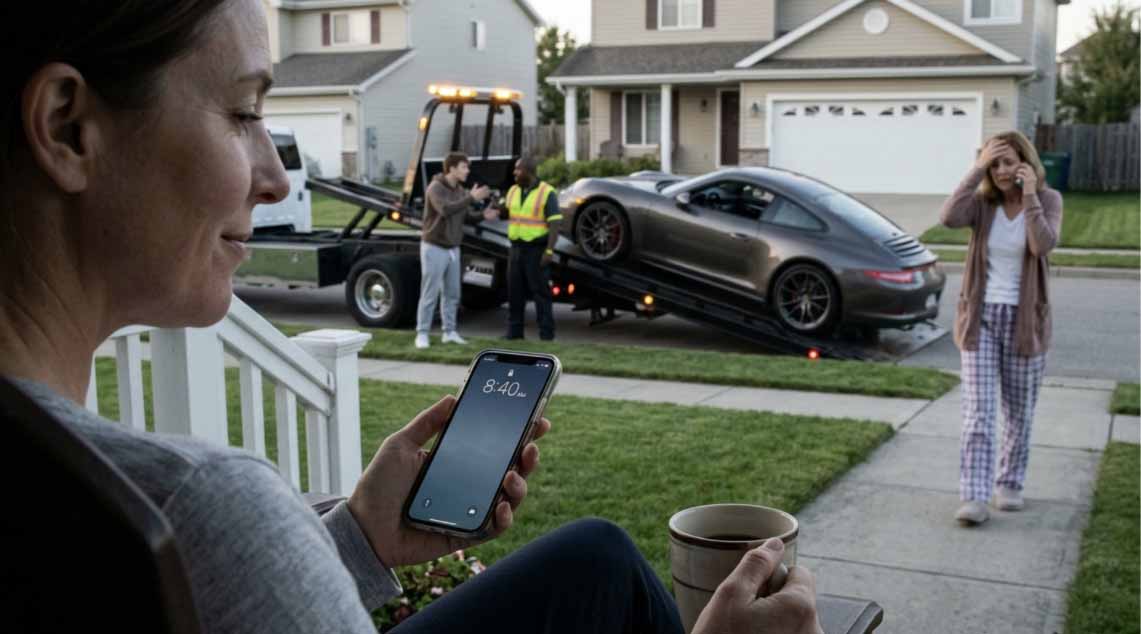
I looked at the clock.
8:43 a.m.
“Jessica,” I said calmly, “did you check whether the car was properly registered?”
“What?”
“The registration. The title. The ownership documents. Did you check them?”
“Matthew, what are you talking about? David bought that car for Carter two years ago!”
I almost laughed.
“Interesting. I don’t remember David paying for it.”
She went quiet.
Then her voice became sharper.
“You know what? This isn’t funny. Carter is crying. He’s supposed to meet his friends this morning. He has plans. He has a life!”
“I’m sure he’ll find a way to manage.”
“YOU DID THIS!”
I didn’t answer immediately.
Instead, I opened my laptop and looked at the account dashboard.
The emergency credit card cancellation had been processed. The account was closed. The outstanding balance was still there, and I had already downloaded every transaction.
Fifteen thousand dollars.
Fifteen thousand dollars spent by someone who had promised to use the card for groceries and emergencies.
I took a breath.
“Jessica, I have a question.”
“What?”
“How much of the money you spent on my card was actually used for groceries?”
Silence.
“Don’t start with that right now.”
“I’m asking a simple question.”
“Matthew, we can talk about money later. Right now, we have a stolen vehicle!”
“Then call the police.”
“I already told you David is doing that!”
“Good.”
I ended the call.
For the first time in years, I didn’t feel guilty.
I felt relieved.
But I knew that was only the beginning.
Because people who have been living comfortably at someone else’s expense rarely accept the moment the free money stops.
They don’t say thank you.
They don’t apologize.
They fight.
And my family was about to prove that better than anyone.
At 9:06 a.m., my doorbell rang.
I wasn’t expecting anyone.
When I opened the door, my mother stood on the porch wearing a cream-colored coat and holding her handbag tightly against her side.
She looked furious.
“Matthew, we need to talk.”
“Good morning, Mom.”
“Don’t good-morning me. Your sister is hysterical.”
“I heard.”
“Carter hasn’t stopped crying.”
I stepped aside and let her enter.
She walked into my living room without waiting for an invitation, just as she had done countless times before.
She sat on the sofa and placed her handbag beside her.
“Do you have any idea what you’ve done?”
I closed the door.
“I removed a vehicle that belongs to me.”
She stared at me.
“What?”
“The Porsche. It’s registered in my name. I paid for it. I insured it. I maintained it. Carter was allowed to drive it. That’s all.”
My mother blinked.
Then she gave a small, dismissive laugh.
“Oh, Matthew. Don’t be ridiculous. You gave him that car.”
“I allowed him to use it.”
“What’s the difference?”
“The difference is that I still own it.”
She shook her head.
“You can’t just take back a birthday present because a teenager made a stupid joke.”
I looked directly at her.
“Is that what you think happened last night?”
“What?”
“That I took the car because Carter embarrassed me?”
She folded her arms.
“Well, what else am I supposed to think?”
I walked toward the kitchen and returned with a folder.
I placed it on the coffee table.
“Read this.”
She didn’t touch it.
“What is it?”
“The vehicle title. Registration. Insurance records. Purchase receipt.”
She glanced at the folder.
Then back at me.
“Matthew, I don’t need to read all that legal nonsense. We’re family.”
I nodded slowly.
“That’s exactly the problem.”
She frowned.
I continued.
“For two years, Carter drove that car without paying a single dollar. I paid the insurance. I paid the registration. I paid for repairs. I even replaced two tires after he damaged them.”
My mother looked uncomfortable.
“He’s young. He needs help getting started.”
“And what about me?”
“What about you?”
“Was I not allowed to have a birthday without being humiliated?”
She sighed.
“Oh, Matthew. You know how Carter is. He jokes around. You take everything too seriously.”
I stared at her.
“Mom, he looked me in the face and told me I looked cheap. Then he poured a drink over my clothes.”
“It was an accident.”
“He was holding the glass and deliberately tipped it toward me.”
“Well, perhaps he didn’t realize how upsetting it would be.”
I laughed quietly.
Not because anything was funny.
Because I suddenly understood something I had spent thirty-two years refusing to accept.
My mother wasn’t confused about Carter’s behavior.
She was protecting it.
And she had been doing that for years.
I pointed toward the folder.
“There’s something else you should know.”
“What?”
“I canceled Jessica’s credit card last night.”
Her expression changed immediately.
“You WHAT?”
“The emergency card.”
She stood up.
“Matthew! How could you?”
“Because it wasn’t being used for emergencies.”
“Your sister needs that card!”
“She has her own bank account.”
“She has a family to support!”
“So do I.”
My mother stared at me as if I had just spoken a foreign language.
Then she lowered her voice.
“Your sister told me you were helping them.”
“I was.”
“She said you were happy to help.”
“I was happy to help when I believed they needed help.”
“And now?”
“Now I know they were taking advantage of me.”
My mother grabbed her handbag.
“You’ve become selfish.”
That word used to hurt me.
For years, I had spent money I didn’t need to spend because I was terrified of hearing that exact accusation.
Selfish.
Ungrateful.
Arrogant.
Too successful to remember his family.
But that morning, the word barely touched me.
I walked her to the door.
“Mom, I hope you have a good day.”
She turned around.
“One day, Matthew, you’ll need your family. And when that happens, don’t expect us to come running.”
I held the door open.
“I think I’ve been waiting for you to come running for a long time.”
She had no answer.
She walked away.
I closed the door.
And for the first time, I didn’t feel the need to call her back.
At 10:15 a.m., my phone rang again.
This time, it was David.
I answered.
“Hello.”
“Matthew, what the hell is going on?”
“Good morning, David.”
“Don’t play games with me. Where’s the Porsche?”
“I believe you should ask Carter.”
“Carter says you took it!”
“Then Carter seems to understand the situation.”
David exhaled sharply.
“You can’t do this. We have a family agreement.”
I raised an eyebrow.
“What family agreement?”
“You said the car was for Carter.”
“I said he could use it.”
“You gave him the keys!”
“Correct.”
“You let him drive it for two years!”
“Also correct.”
“So what changed?”
I paused.
“Last night.”
He laughed angrily.
“Are you seriously doing all this because of a joke?”
“No, David. I’m doing this because I finally stopped pretending that your family respects me.”
He became quiet.
Then he tried another approach.
“Look, Matt. Carter is nineteen. He made a mistake. You know how boys are. We can sit down and talk about it.”
“I’m not interested.”
“Jessica is under a lot of stress.”
“Then she should stop spending money she doesn’t have.”
David’s breathing changed.
“What does that mean?”
“It means the credit card is canceled.”
“You can’t cancel it! We have payments scheduled!”
I looked at my computer.
“Which payments?”
“Mortgage, utilities, groceries, everything!”
I slowly turned my chair toward the window.
“David, that card was never supposed to pay your mortgage.”
“We had an arrangement!”
“No. We had an emergency card.”
“You’re splitting hairs!”
“I’m reading the agreement.”
He swore under his breath.
Then he said something that made me sit up straighter.
“You know what? Maybe we should tell your mother what you’ve really been doing with your money.”
I frowned.
“What?”
“You heard me.”
“Go ahead.”
He laughed.
“Don’t think you’re the only one with secrets, Matthew.”
I remained silent.
“Your mother doesn’t know everything about you.”
For a moment, I wondered what he meant.
Then he hung up.
I sat there staring at my phone.
David had never spoken to me like that before.
He was usually the quiet one. The man who avoided conflict, accepted whatever Jessica said, and allowed Carter to behave however he wanted.
But that morning, something had changed.
He wasn’t simply angry about the Porsche.
He was afraid.
And I wanted to know why.
At 11:32 a.m., Luke called.
Luke had been my friend since college. He was one of the few people who knew how much I had sacrificed financially for my family.
He had also helped me arrange the vehicle recovery the night before.
“Hey, Matt,” he said. “Everything went smoothly. The Porsche is secured.”
“Thanks, Luke.”
“No problem. But I have a question.”
“What?”
“Are you sure you want to keep it?”
I looked down at the folder beside my laptop.
“Yes.”
“Because there’s something you should know. The car has a few issues.”
“What kind of issues?”
“Nothing major mechanically. But when we loaded it, I noticed a large amount of personal paperwork in the glove compartment. Some of it looks like financial documents.”
I frowned.
“Financial documents?”
“Yeah. Bank statements, dealership paperwork, and a couple of envelopes. I didn’t open anything. I just noticed the names.”
“Whose names?”
“David and Jessica.”
I sat up.
“Why would their paperwork be in my car?”
“That’s what I wondered.”
I rubbed my forehead.
“Did you see anything else?”
Luke hesitated.
“One envelope had the name of a bank on it. There was also a document with a number written across the top. It looked like a loan account.”
I stared at the wall.
“Can you send me a picture of the outside of the documents?”
“Sure. I’ll send it now.”
A few seconds later, my phone vibrated.
I opened the photograph.
It showed a white envelope with a bank logo.
Below the logo was a familiar name.
Jessica Davis.
And beside it was a handwritten note:
SECOND VEHICLE — COLLATERAL
I read it twice.
Then a third time.
My stomach tightened.
I immediately called Luke back.
“Luke, don’t throw anything away. Keep every document exactly where it is.”
“What’s going on?”
“I don’t know yet.”
But I had a feeling I was about to discover something much bigger than a spoiled nephew and an expensive car.
At 12:04 p.m., Jessica sent me a text.
Matthew, we need to talk. Please don’t make this worse. Carter is devastated. Mom is crying. David is furious. Whatever happened last night, we can fix it.
I didn’t respond.
Two minutes later, another message arrived.
You have no idea what you’ve done to this family.
I stared at the screen.
Then I typed one sentence.
I think I’m finally starting to understand what this family has done to me.
I sent it.
She immediately called.
I ignored it.
Then she sent a voice message.
I almost deleted it without listening.
But something made me press play.
Her voice sounded different.
No screaming.
No anger.
Just panic.
“Matthew, please. I know you’re upset. I know Carter shouldn’t have done what he did. But you need to understand something. That car isn’t just a car anymore. David used it for something, and if you don’t give it back, we’re going to have a serious problem.”
I replayed the message.
That car isn’t just a car anymore.
I leaned back.
Then I called Luke.
“Don’t move anything yet.”
“What?”
“I need you to check whether there’s a loan agreement connected to the vehicle. Don’t sign anything. Don’t hand it to anyone. I want to speak to an attorney first.”
“Understood.”
I ended the call.
For the next thirty minutes, I couldn’t concentrate on anything.
I had spent two years believing I had purchased a luxury car for a spoiled nephew.
Now I was beginning to suspect that my family had used the car for something else entirely.
At 1:17 p.m., an unknown number appeared on my phone.
I answered.
“Hello?”
“Mr. Davis?”
“Yes.”
“My name is Andrew Miller. I’m calling from First National Auto Finance.”
I straightened in my chair.
“How can I help you?”
“I’m contacting you regarding a vehicle registered under your name. A black Porsche Macan.”
I closed my eyes for a moment.
“Go ahead.”
“There’s an outstanding matter involving a financing application connected to that vehicle. We need to verify certain information.”
My fingers tightened around the phone.
“What kind of financing application?”
There was a brief pause.
“According to our records, a loan application was submitted using the vehicle identification number associated with your Porsche. The applicant listed himself as the vehicle owner.”
“Who?”
“Mr. David Davis.”
I felt the room become very quiet.
David.
My brother-in-law.
The man who had just told me I couldn’t take back a car that I legally owned.
“Was the loan approved?” I asked.
“No, sir. The application is currently under review because the ownership documentation does not match the applicant’s declaration.”
I looked at the photograph Luke had sent me.
The envelope.
The handwritten note.
Second vehicle — collateral.
“How much was he trying to borrow?”
Another pause.
“Approximately $85,000.”
I slowly stood up.
Eighty-five thousand dollars.
For a moment, I couldn’t speak.
Then I asked the only question that mattered.
“Did he use my personal information?”
“That’s one of the issues we’re trying to clarify, sir.”
My heart started beating faster.
“What information?”
“The application contains your full legal name as the registered vehicle owner, along with an authorization document that appears to carry your signature.”
I gripped the edge of my desk.
“My signature?”
“Yes, sir.”
I stared at the wall.
I had never signed any authorization.
Not once.
“Mr. Miller,” I said carefully, “I did not authorize that loan application. I did not give David permission to use my vehicle as collateral. I did not sign any document allowing him to borrow money against it.”
There was a pause.
“Understood, sir. We can place a formal dispute on the application and provide you with the relevant documentation.”
“Please do.”
“Of course. We’ll also advise you on the next steps.”
When the call ended, I remained standing.
The birthday dinner suddenly felt very far away.
The cherry punch.
Carter’s smile.
My mother’s laughter.
Jessica’s anger.
David’s threat.
Everything seemed connected now.
I walked to my office safe and pulled out the original Porsche purchase documents.
Then I called my attorney.
His name was Robert Hayes.
He had handled several property and financial matters for me over the years.
When he answered, I didn’t waste time.
“Robert, I need your help.”
“What happened?”
“I think someone tried to obtain an $85,000 loan using my vehicle as collateral without my permission.”
He became serious immediately.
“Who?”
“My brother-in-law.”
“Do you have the documents?”
“I’m getting them.”
“Matthew, listen carefully. Don’t confront him yet. Don’t threaten him. Preserve every message, every document, and every communication from the lender. We need to establish exactly what was submitted and whether your signature was forged.”
I nodded, even though he couldn’t see me.
“Understood.”
“And one more thing.”
“What?”
“If this is connected to other financial accounts or credit applications, we need to check those too.”
I looked toward the closed office door.
Because suddenly I remembered something.
Three months earlier, Jessica had asked me to send her a photograph of my driver’s license.
She said she needed it to complete some family insurance paperwork.
I had sent it without thinking.
At the time, it had seemed harmless.
Now I wasn’t so sure.
At 3:26 p.m., I received an email from First National Auto Finance.
The subject line read:
URGENT: DISPUTED VEHICLE COLLATERAL APPLICATION
I opened the attachment.
The first page contained David’s name.
The second page contained the vehicle information.
The third page contained the loan amount.
And the fourth page contained a signature.
My signature.
Or something that looked almost exactly like it.
I enlarged the document.
The letters were close.
The shape of the M.
The way the D curved.
Even the small line beneath my surname.
But I knew it wasn’t mine.
I had signed thousands of documents throughout my career.
I knew my signature better than I knew the lines on my own hands.
This was a copy.
A very convincing copy.
I downloaded the document and forwarded it to Robert.
Then I noticed something at the bottom of the application.
A second contact number.
I recognized it immediately.
Jessica’s mobile number.
I stared at the screen.
Why was Jessica listed as an authorized contact?
And why had David used a vehicle that belonged to me to request an $85,000 loan?
I opened another attachment.
It was a summary of the proposed loan arrangement.
The funds were intended for a business expansion.
The business name was unfamiliar.
JD Lifestyle Ventures LLC.
I searched the name in my personal records.
Nothing.
Then I remembered the expensive vacation Jessica and David had taken six months earlier.
The designer bags.
The new kitchen.
The private school fees they had suddenly started discussing.
They had told everyone David was doing extremely well.
Apparently, they had been borrowing money to maintain that image.
And now they had attempted to borrow against my property.
I picked up my phone and called Jessica.
This time, she answered immediately.
“Matthew?”
“Did David apply for an $85,000 loan using my Porsche?”
Silence.
Then I heard her breathing.
“What are you talking about?”
“Don’t pretend you don’t understand.”
“Matthew, please. It’s not what you think.”
“Then explain it.”
She began crying.
“David was trying to help us.”
“By forging my signature?”
“He wasn’t going to take the money without telling you!”
I closed my eyes.
That sentence told me everything.
“He wasn’t going to take the money without telling me?”
“Matthew, listen—”
“Did you know?”
She stopped crying.
“Know what?”
“Did you know David submitted a loan application using my vehicle as collateral?”
A long silence followed.
Then she whispered:
“Yes.”
I felt something break inside me.
Not because I was surprised.
But because a small part of me had still hoped she would deny it.
“Jessica,” I said quietly, “you knew?”
“We were desperate.”
“Desperate for what?”
She started sobbing again.
“David’s business has been struggling. We had debts. We had bills. Carter needed money. We thought we could borrow against the Porsche and pay it back before you ever found out.”
I looked at the document on my computer.
“That’s my car.”
“I know.”
“You knew it belonged to me.”
“I know, Matthew!”
“Then why would you allow this?”
She cried harder.
“Because we had no other choice!”
I stood up.
“You always have a choice, Jessica. You just never wanted to choose a life you could actually afford.”
She said nothing.
Then I asked:
“Did Carter know?”
Her answer came almost immediately.
“No.”
But something about her voice made me suspicious.
“Are you sure?”
“Matthew, he’s just a kid.”
“He’s nineteen.”
“He doesn’t understand these things.”
I looked at the photograph of the Porsche sitting in the recovery facility.
“Jessica, I’m going to ask you one more time. Did Carter know about the loan?”
She hesitated.
Then I heard another voice in the background.
David.
“Tell him the truth!”
Jessica began crying uncontrollably.
And then she said something that made my blood run cold.
“Matthew… Carter was the one who gave David the documents.”
I didn’t move.
“What documents?”
“Your driver’s license. The insurance information. Some of the paperwork you gave us when you bought the car.”
I slowly lowered myself into my chair.
For a moment, I couldn’t hear anything except the sound of my own breathing.
Then Jessica continued.
“He found them in the glove compartment. He gave them to David because David said he needed them to arrange something for the business.”
I stared at the computer screen.
The same nephew who had poured cherry punch over my birthday shirt.
The same nephew who had called me cheap.
The same nephew who had driven my Porsche for two years without paying a single dollar.
He had apparently helped his father obtain my private information.
And they had all known.
I spoke slowly.
“Jessica, I want you to understand something.”
“Matthew, please—”
“Whatever happens next, don’t tell Carter that I’m angry. Don’t tell him I’m emotional. Don’t tell him this is about his birthday joke.”
I paused.
“Tell him I’m getting legal advice.”
Then I ended the call.
At 5:48 p.m., Robert called me back.
“Matthew, I’ve reviewed the documents.”
“And?”
“The signature is suspicious. We need the original application and the lender’s submission records, but I agree that this needs to be treated seriously.”
“What should I do?”
“First, file a formal identity and signature dispute with the lender. Second, review your credit reports and financial accounts for unfamiliar applications. Third, preserve the original documents. Don’t alter anything.”
“What about the Porsche?”
“If the vehicle is legally yours, the lender cannot simply treat it as David’s property because he submitted an application. But let me review the title, the application, and any relevant agreements before we take further action.”
“Understood.”
“And Matthew?”
“Yes?”
“Don’t let your family pressure you into signing anything or returning documents without understanding what they are.”
I looked at the folder on my desk.
“I won’t.”
After the call, I sat quietly for a while.
Then I opened my banking account.
I reviewed the emergency card.
The spending history.
The payments.
The transactions.
And for the first time, I began making a list.
Not of what I owed them.
But of everything I had paid on their behalf.
Mortgage assistance.
Car insurance.
School expenses.
Medical bills.
Groceries.
Vacation emergencies.
Home repairs.
There were thousands of dollars I had completely forgotten about.
And then there were the fifteen thousand dollars from the credit card.
I downloaded everything.
I wasn’t doing it to punish them.
I was doing it because I was finished living inside a story where everyone remembered what I had supposedly failed to do, but nobody remembered what I had actually done.
At 7:12 p.m., someone knocked on my front door.
I looked through the glass.
Carter.
He was standing on my porch wearing a black hoodie, expensive sneakers, and the same arrogant expression he had worn at my birthday dinner.
But something was different.
He wasn’t smiling.
I opened the door.
“What do you want?”
He pushed past me.
“Where’s my Porsche?”
I closed the door.
“Good evening, Carter.”
“Don’t start.”
He turned toward me.
“I want my car back.”
“It’s not your car.”
He laughed.
“Seriously? You’re still doing this?”
“Yes.”
“You’re acting like a child.”
I looked at him.
“Interesting choice of words.”
He rolled his eyes.
“Look, Uncle Matt. I know you’re mad about the punch thing. It was a joke. Everyone laughed.”
“Not everyone.”
“My grandmother laughed.”
“Your grandmother also thinks you can do no wrong.”
He stepped closer.
“Just give me the keys.”
“No.”
His expression changed.
“You can’t keep my car.”
“I can keep my property.”
“Dad says you signed everything over to me.”
“Your father is mistaken.”
Carter looked away for a second.
Then he laughed again.
“Whatever. He said you’d eventually calm down.”
I studied his face.
“Did your father also tell you about the $85,000 loan application?”
The laughter disappeared.
His eyes moved toward mine.
For a brief moment, he looked genuinely frightened.
Then he recovered.
“What loan?”
I said nothing.
He shoved his hands into his pockets.
“I don’t know what you’re talking about.”
“That’s interesting.”
“Can I go now?”
“You came here demanding a car. Now you’re pretending you don’t know anything about the financial documents connected to it.”
He looked at me angrily.
“Why do you always have to make everything complicated?”
I almost smiled.
“Because somebody has to be responsible.”
He shook his head.
“You know what? You’re the reason Mom and Dad are struggling. You act like you’re better than everyone because you have a good job and some money.”
I stared at him.
“Carter, I have spent years helping your parents.”
“Then keep helping them!”
There it was.
The entitlement.
The complete absence of gratitude.
He genuinely believed that because I had money, I was obligated to provide it.
I walked toward the door and opened it.
“Go home.”
He didn’t move.
“I’m serious.”
He looked at me for several seconds.
Then he pointed a finger at my chest.
“You’re going to regret this.”
I looked down at his finger.
Then back at him.
“No, Carter. I think that’s what you’re finally starting to understand.”
He stormed out.
Before reaching his car, he turned around.
“One more thing. Dad says you’re not the only one who knows how to play dirty.”
I watched him walk down the driveway.
Then I closed the door.
My phone vibrated almost immediately.
A message from Robert.
Matthew, I just received another document from the lender. You need to see this immediately.
I opened the attachment.
It was another page from the loan application.
At the top was the name of the applicant.
David Davis.
Below it was the proposed collateral.
My Porsche Macan.
And at the bottom was a second signature.
This one belonged to someone else.
Jessica Davis.
But it wasn’t the signature that made me stop breathing.
It was the handwritten statement beside it.
I confirm that Matthew Davis has verbally authorized the use of this vehicle as security and has agreed to transfer ownership if the loan is approved.
I read the sentence again.
Then I looked at the date.
The application had been submitted eleven days before my birthday.
Eleven days before Carter threw the cherry punch.
Eleven days before I canceled the credit card.
Eleven days before I took back the Porsche.
Suddenly, I understood why Jessica had been so desperate to get me to return the car.
They weren’t just losing a luxury vehicle.
They were losing access to an $85,000 loan they had already planned to spend.
But just as I was about to forward the document to Robert, another email arrived.
This one was from my bank’s fraud department.
The subject line was simple.
ADDITIONAL ACCOUNT ACTIVITY REQUIRING YOUR ATTENTION.
I opened it.
There was a list of three recent financial inquiries.
The first involved the Porsche.
The second involved a personal loan.
The third involved a credit application.
All three had been submitted using my personal information.
And all three had one contact number in common.
Jessica’s.
I sat completely still.
Then my phone rang.
It was Robert.
I answered immediately.
“Matthew, don’t panic. But I think we need to investigate something much bigger.”
“What did you find?”
He paused.
Then he said:
“Someone may have been using your identity for months. And based on the dates, this may have started long before the Porsche application.”
I looked toward the family photograph on my bookshelf.
Jessica.
Carter.
David.
My mother.
Four people I had spent years protecting.
I had once believed that if I kept helping them, they would eventually understand how much I loved them.
Now I was beginning to wonder whether they had ever seen me as anything other than an opportunity.
And the worst part?
I still didn’t know how much of my life they had been using without my permission.
PART 4
“Someone may have been using your identity for months.”
Robert’s words stayed in my head long after the call ended.
I sat at my desk, staring at the three financial inquiries on my computer.
Three applications.
Three attempts to borrow money using my personal information.
And one familiar phone number attached to all of them.
Jessica’s.
For years, I had believed my sister was simply terrible with money. I thought she spent too much, borrowed too often, and relied on me because she had never learned how to manage her finances.
I was wrong.
This wasn’t just irresponsibility anymore.
Someone had deliberately used my information.
And I was going to find out exactly how far it went.
“Robert,” I said when I called him back, “I want everything investigated. Every application, every account, every document. I don’t care how long it takes.”
“Understood. But I need you to do something first. Contact your bank, secure your accounts, change your passwords, and report the suspected identity misuse. Don’t confront your family until we’ve preserved the evidence.”
“I’ll do that.”
“And Matthew?”
“Yes?”
“Prepare yourself. This could become a criminal matter.”
I looked down at the photograph of my family.
“I think it already is.”
The next morning, I woke up to twenty-three missed calls.
Eleven from Jessica.
Six from my mother.
Four from David.
And two from Carter.
There were also several messages.
The first was from my mother.
Matthew, please call me. Your sister is having a terrible night. We need to solve this as a family.
The second was from Jessica.
You have gone too far. David could lose everything because of you.
The third was from Carter.
Uncle Matt, give me my car back. This is getting ridiculous.
I read them all.
Then I put my phone down.
I had spent years responding to every emergency immediately.
This time, I had other priorities.
At 9:30 a.m., I met Robert at his office.
He had already organized the documents into separate folders.
The first contained the Porsche purchase agreement.
The second contained the disputed loan application.
The third contained the three financial inquiries.
And the fourth contained something I hadn’t expected.
A copy of an application for a $32,000 personal loan.
The applicant’s name was Matthew Davis.
My name.
My date of birth.
My address.
My employment information.
Everything was correct.
Except I had never applied for that loan.
“Did anyone receive the money?” I asked.
Robert nodded.
“That’s what we’re investigating. The lender’s initial records indicate that the application was withdrawn before final approval. But we need the complete file.”
“Who submitted it?”
“The contact information points toward your sister. However, we need to establish who actually completed the application.”
I leaned forward.
“What about the other application?”
“The same issue. Your information appears to have been used without your authorization.”
I rubbed my forehead.
Then Robert opened another folder.
“This is where things become more interesting.”
He placed a printed bank statement in front of me.
It showed a series of transactions from an account connected to Jessica and David.
I scanned the page.
Several payments were labeled as vehicle expenses.
Others were labeled as household assistance.
Then I noticed something.
A transfer of $18,500.
The recipient was a company called JD Lifestyle Ventures.
The same company listed in David’s loan application.
“What’s this?”
Robert pointed to the date.
“Three months ago. We don’t yet know where the money originated, but the account activity suggests they were moving funds between several sources.”
I stared at the page.
“Could they have used my card?”
“That’s one possibility we’re checking.”
I felt my jaw tighten.
The emergency card had been connected to my reserve account.
Jessica had access to it.
And if she had used that account to move money around, this was no longer simply about unauthorized purchases.
It could involve much more.
Robert closed the folder.
“We need to get the complete transaction history and let the relevant investigators determine what happened. Don’t make assumptions yet.”
I nodded.
For the first time, I was grateful to have someone in my corner who understood that emotions were not evidence.
At 12:45 p.m., Jessica appeared at my office.
My assistant called first.
“Mr. Davis, your sister is here. She says it’s urgent.”
I looked at my calendar.
“I don’t have an appointment with her.”
“She says she won’t leave until she speaks with you.”
I sighed.
“Send her in.”
A moment later, Jessica entered.
Her makeup was smudged.
Her hair was tied back carelessly.
She looked nothing like the woman who had walked into my birthday dinner wearing a designer dress and bragging about her recent vacation.
She looked exhausted.
“Matthew.”
“Jessica.”
She closed the door.
Then she immediately began crying.
“Please, you have to stop this.”
I remained seated.
“Stop what?”
“This investigation. The calls from the bank. Robert contacting us. David is terrified. Mom hasn’t slept.”
I looked at her.
“Are you worried about what happened, or are you worried about getting caught?”
Her face changed.
“How can you say that to me?”
“Because I didn’t apply for those loans.”
She sat down.
“David made a mistake.”
“Several mistakes.”
“He was trying to keep the family together.”
“By using my identity?”
“He was desperate!”
I opened a drawer and took out a copy of the disputed application.
“Did you sign this?”
She stared at it.
Her eyes filled with tears.
“Matthew, please.”
“Did you sign it?”
She looked down.
“Yes.”
The answer was so quiet I almost didn’t hear it.
I felt something heavy settle in my chest.
“Why?”
She wiped her cheeks.
“David told me it was temporary. He said he could use the Porsche as collateral, borrow the money, pay off the business debts, and return everything before you ever needed to know.”
“Did you tell him he could use my name?”
She didn’t answer.
“Jessica.”
“Yes.”
I slowly leaned back.
She continued.
“I thought it was just paperwork. I thought the bank wouldn’t approve anything without you signing in person.”
“But you signed a document saying I had authorized it.”
“I know.”
“And you knew I hadn’t.”
She covered her face.
“I know!”
For a moment, neither of us spoke.
Then I asked something that had been bothering me since the previous night.
“What did you use the emergency card for?”
She looked up.
“What?”
“The fifteen thousand dollars. Where did it go?”
She began crying again.
“Some of it was for the house.”
“And the rest?”
“Things we needed.”
“First-class flights?”
She looked away.
“David had a business meeting.”
“Designer handbags?”
“I was going through a difficult time.”
“Concert tickets?”
She said nothing.
I pushed the transaction statement toward her.
“Jessica, I gave you that card because you told me you couldn’t afford groceries. I trusted you.”
She looked at me.
“Don’t you understand? We were trying to maintain our lifestyle.”
I almost laughed.
“Your lifestyle?”
She nodded.
“Everyone thought we were doing well. Carter’s friends have wealthy parents. We couldn’t let him feel embarrassed. David’s business partners expected us to attend certain events. We had to look successful.”
I stared at her.
“So you used my money to convince other people you were successful?”
She started sobbing.
I didn’t say anything.
Because there was no explanation that could make that sentence less disgusting.
After a few seconds, she reached across the desk.
“Matthew, we’re family. Please. You can’t destroy us over this.”
I gently moved my hand away.
“Jessica, I didn’t create this situation.”
“But you can fix it.”
There it was again.
Even now, even after everything, she still believed my responsibility was to rescue her.
I stood.
“I’m not paying your debts. I’m not signing anything. I’m not withdrawing a complaint. And I’m not giving Carter the Porsche.”
Her face turned pale.
“Then what happens to us?”
I looked at her.
“You finally live with the consequences of your decisions.”
She stood up so quickly that her chair moved backward.
“You’re heartless!”
I opened the door.
“No, Jessica. I’m just no longer available to be used.”
She walked out without another word.
Three days later, the truth became much worse.
My bank’s fraud team identified additional suspicious activity.
Someone had attempted to open a credit account using my information.
The application included my employment details and a copy of my driver’s license.
The application had been submitted through an email address connected to Jessica.
There was also a delivery address.
My sister’s house.
The account had not been approved.
But that wasn’t the worst discovery.
The worst discovery came when Robert received the complete documentation from the auto finance company.
There were messages between David and the loan broker.
They discussed using the Porsche as collateral.
David had claimed that I was willing to transfer ownership once the financing was approved.
The broker had requested proof.
David had sent a scanned copy of my vehicle registration and a document containing the disputed signature.
One message stood out.
David had written:
Matthew doesn’t need to know about the loan. The car is technically under his name for insurance reasons, but Carter has been using it for two years. We can sort out the paperwork after the funds arrive.
I read the message twice.
Then I handed my phone to Robert.
He read it silently.
“That’s important,” he said.
“Very.”
“There are also messages suggesting that Carter knew the vehicle documents were being used.”
I stared at him.
“How much did he know?”
Robert turned another page.
“One message from Carter says, ‘Just make sure Uncle Matt doesn’t start asking questions about the paperwork. He’s always checking his accounts.’”
I closed my eyes.
So Carter had known.
He had known that his father was using my property.
He had known that my personal information was involved.
And yet he had sat at my birthday table, looked me in the face, and called me cheap.
For two years, I had believed that his arrogance came from being spoiled.
Now I understood that he had also learned something else from his parents.
He believed rules were for other people.
And he believed I would always clean up the mess.
On Friday afternoon, my mother called.
I almost didn’t answer.
But I decided it was time to have one final conversation.
“Hello, Mom.”
“Matthew, thank goodness.”
“What happened?”
“Your sister and David are in serious trouble.”
I remained silent.
“The bank is asking questions. David says they might take legal action. Carter is frightened. Your sister can’t stop crying.”
I looked out of my office window.
“What do you want me to do?”
“I want you to help them.”
I closed my eyes.
“Mom, I have already helped them.”
“But this is different.”
“Yes. It is.”
She began crying.
“Matthew, please. You’re the only one who can fix this.”
I felt a strange sadness.
Not anger.
Not even disappointment.
Just sadness.
“Mom, do you remember my birthday dinner?”
There was a pause.
“What about it?”
“Do you remember what Carter did?”
“Oh, Matthew. We’re not going to start that again.”
“He poured cherry punch over me.”
“He was joking.”
“He called me cheap.”
“He’s young.”
“And you laughed.”
Silence.
I continued.
“You watched him humiliate me in my own house, and you told me not to ruin the evening.”
“I didn’t mean to hurt you.”
“But you did.”
She started crying harder.
“I was trying to keep everyone happy.”
I nodded slowly.
“That’s what you’ve always done. You keep Jessica happy. You keep Carter happy. You keep David happy. And somehow, I’m always the person who is expected to accept whatever happens.”
“That’s not true.”
“Then answer me honestly. If I had been the one who needed help, would they have done for me what I did for them?”
She didn’t answer.
“Would Jessica have paid my mortgage? Would David have paid my insurance? Would Carter have given me his car if I couldn’t afford transportation?”
Nothing.
I waited.
Finally, she whispered:
“Matthew, I don’t know.”
I swallowed.
“That’s exactly what I thought.”
“Please don’t abandon your family.”
I looked at the photographs on my desk.
“I haven’t abandoned anyone, Mom. I’ve simply stopped abandoning myself.”
Then I ended the call.
Two weeks passed.
During that time, I did three things.
First, I secured every financial account and placed fraud alerts where appropriate.
Second, I worked with Robert and the relevant institutions to dispute the unauthorized applications and preserve the evidence.
Third, I stopped answering requests for money.
That last one turned out to be the hardest for my family to accept.
Jessica sent messages almost every day.
Sometimes she apologized.
Sometimes she blamed David.
Sometimes she blamed Carter.
Sometimes she blamed me.
One message said:
I hope you’re happy. Our family is falling apart.
Another said:
Mom is sick because of all this stress.
Another said:
You used to be a good brother.
I didn’t respond.
David also tried several times to contact me.
At first, he was aggressive.
Then he became polite.
Finally, he sent an email.
Matthew, I understand you’re upset. I would like to arrange a meeting and resolve the vehicle issue privately. I can offer you $5,000 toward the outstanding expenses if you agree to return the Porsche and stop pursuing the matter.
I read it twice.
Five thousand dollars.
For two years of insurance, maintenance, and other expenses.
For an attempted $85,000 loan.
For unauthorized use of my personal information.
I forwarded the email to Robert.
His response was simple.
Do not accept or sign anything without reviewing it first.
I didn’t.
The Porsche remained secured while the ownership and financing dispute was reviewed.
And Carter had to find another way to get around.
According to my mother, he had started taking the bus.
Apparently, that was the greatest tragedy anyone in my family had ever experienced.
Then came the phone call I had never expected.
It was from Carter.
I answered because I wanted to hear what he had to say.
“Hello?”
“Uncle Matt?”
His voice sounded different.
No arrogance.
No attitude.
Just uncertainty.
“What do you want, Carter?”
He hesitated.
“Can we talk?”
“About what?”
“The car.”
I almost smiled.
“Of course.”
He sighed.
“Look, I know what I did was wrong.”
I waited.
“I shouldn’t have thrown the drink.”
“No.”
“And I shouldn’t have called you cheap.”
“No.”
He was quiet.
Then he said:
“But you didn’t have to take everything away.”
I looked out the window.
“What did I take away?”
“My car. My credit card. Everything.”
I slowly shook my head.
“Carter, I never gave you a credit card.”
“You know what I mean.”
“I do.”
He exhaled.
“Dad says you could have handled this differently.”
“Your father is welcome to have his opinion.”
“Mom says you’re trying to destroy us.”
“Your mother knows what happened.”
Carter went silent.
Then he asked:
“Are you really going to keep the Porsche?”
I considered the question.
“Yes.”
“But why? You don’t even need it.”
That sentence told me how little he understood.
He believed that because I had money, ownership didn’t matter.
Because I had a successful career, my property was available to anyone who wanted it.
Because I had helped them before, I was obligated to keep helping them forever.
“Carter,” I said, “do you remember what I told you when I gave you the keys?”
He didn’t answer.
“I told you that if you missed a payment, the car would go away.”
“You never actually made me pay.”
“Correct. I gave you two years of chances.”
He became defensive.
“You’re my uncle!”
“And you’re nineteen. Old enough to understand that other people’s money is not yours.”
He said nothing.
Then I added:
“There’s something else you should understand. I don’t care whether you ever drive a Porsche again. I care that you learn to respect people, even when they aren’t giving you something.”
He sighed.
“So you’re not giving it back?”
“No.”
He hung up.
I put my phone down.
I wasn’t expecting an apology.
Not a real one, anyway.
But something about the conversation made me think that perhaps, one day, Carter might finally understand.
I just wasn’t going to pay for that lesson anymore.
Six weeks later, the investigation reached an important turning point.
Robert called me on a Tuesday morning.
“Matthew, we have an update.”
I closed my office door.
“What happened?”
“The lender has confirmed that the Porsche application was not approved. Your ownership dispute was accepted, and the vehicle was never transferred.”
I exhaled.
“Good.”
“There is also a separate investigation into the use of your personal information. The financial institutions have received your formal disputes, and the documentation has been preserved.”
“What about David?”
“The evidence has been referred to the appropriate authorities for review. We shouldn’t assume the final outcome, but the matter is being taken seriously.”
I nodded.
“And the money?”
“We’ve also prepared a full accounting of the charges on your emergency card. Some transactions are clearly unrelated to the purpose for which you provided it. You can pursue repayment through the appropriate legal process if you choose.”
I looked at the spreadsheet on my desk.
Nearly fifteen thousand dollars.
It wasn’t the largest amount of money I had ever seen.
But it was the amount that finally opened my eyes.
“Prepare everything,” I said.
“We will.”
After ending the call, I walked to the window.
Outside, the city was moving as usual.
Cars passing.
People going to work.
Someone buying coffee.
The world hadn’t changed.
But my world had.
For the first time, I wasn’t waiting for the next family emergency.
I wasn’t calculating how much money I needed to send.
I wasn’t wondering whether Jessica would be angry if I said no.
I was simply living my life.
And it felt wonderful.
The following Sunday, my mother invited me to lunch.
She said she wanted to talk privately.
I agreed, but I chose a small restaurant rather than her house.
When I arrived, she was already seated.
She looked older than I remembered.
There were shadows beneath her eyes.
For several minutes, we spoke about ordinary things.
The weather.
Work.
A cousin who had recently moved.
Then she placed her napkin on the table.
“Matthew, I owe you an apology.”
I looked at her.
She continued.
“I’ve been thinking about your birthday.”
I didn’t interrupt.
“I should never have laughed. I should have stopped Carter. I should have told him that what he did was unacceptable.”
I nodded.
“Yes, you should have.”
Her eyes filled.
“I thought you were strong enough to handle it.”
I looked down at my hands.
“Being strong doesn’t mean I don’t get hurt.”
She nodded.
“I know that now.”
For a moment, I wanted to tell her everything I had been feeling.
How many nights I had worried about Jessica’s mortgage.
How many weekends I had spent fixing problems that weren’t mine.
How often I had ignored my own plans because someone else needed money.
But I realized something.
I didn’t need to explain my pain to make it real.
I simply needed to stop pretending it hadn’t happened.
My mother reached across the table.
“Can you forgive me?”
I looked at her hand.
Then I placed mine over it.
“I can try. But things cannot go back to how they were.”
She nodded slowly.
“I understand.”
“I love you, Mom. But I won’t be financing Jessica’s life anymore. I won’t pay Carter’s expenses. And I won’t allow anyone to use my name or property without permission.”
She wiped her eyes.
“That’s fair.”
It was the first time I had heard her say those words.
And although it didn’t repair everything, it was a beginning.
Three months later, Jessica came to my house.
This time, she didn’t walk in.
She waited on the porch until I opened the door.
“Can I come in?”
I stepped aside.
She looked tired.
Not the glamorous, carefully styled version of herself I was used to seeing.
She wore simple clothes.
Her handbag was old.
Her makeup was minimal.
We sat in the living room.
For a while, neither of us spoke.
Then she placed an envelope on the coffee table.
“What’s this?”
“A repayment proposal.”
I opened it.
Inside was a letter outlining a plan to repay the unauthorized charges on my emergency card.
It wasn’t a complete repayment.
But it was an acknowledgment.
She had also included an apology.
I read the first few lines.
Then I put it down.
“Why now?”
She looked at her hands.
“Because I finally understand that you weren’t going to keep rescuing us.”
I said nothing.
She continued.
“David and I have been arguing constantly. His business is in serious trouble. We sold some things. We moved into a smaller house. Carter had to get a job.”
I nodded.
“I’m sorry things have been difficult.”
She looked up.
“Are you?”
“Yes. I never wanted you to suffer.”
“Then why didn’t you help us?”
I took a breath.
“Jessica, I did help you. For years. But helping someone doesn’t mean allowing them to destroy your financial future and mine.”
Her eyes filled.
“I know.”
She looked around my living room.
“I used to think you were lucky. You had a good job, a nice house, money in the bank. I thought everything came easily to you.”
I smiled sadly.
“Nothing came easily.”
“I know that now.”
She paused.
“Carter wants to apologize.”
I looked at her.
“Does he?”
“Yes. He knows what he did.”
I didn’t answer immediately.
Then I said:
“He can apologize when he’s ready to take responsibility. I don’t need an apology because he wants something back.”
She nodded.
“I understand.”
Before leaving, she stood near the door.
“Matthew?”
“Yes?”
“I’m sorry I treated you like an ATM.”
I looked at my sister.
For the first time in a long time, I believed she understood what she was saying.
“I hope you build a life you don’t have to pretend to afford,” I told her.
She nodded.
Then she left.
Four months after my birthday, Carter finally came to see me.
He arrived on a Saturday afternoon.
He was wearing ordinary jeans and a plain shirt.
No designer sneakers.
No expensive watch.
No arrogant smile.
He stood at the door holding a small paper bag.
“Hey, Uncle Matt.”
“Hello, Carter.”
He looked uncomfortable.
“Can I come in?”
I opened the door.
He sat on the sofa and placed the paper bag on the coffee table.
“What’s that?” I asked.
“Birthday gift.”
I stared at him.
“My birthday was months ago.”
“I know.”
He looked down.
“It’s late.”
I opened the bag.
Inside was a simple black coffee mug.
Nothing expensive.
Nothing impressive.
Just a mug with a small message printed on it:
THANK YOU FOR EVERYTHING.
I looked at him.
He swallowed.
“I bought it with my own money.”
I nodded.
“Thank you.”
He sat quietly for a moment.
Then he spoke.
“I got a job.”
“Where?”
“At a local car dealership. I’m doing basic sales work and helping with vehicle deliveries.”
“That’s good.”
He nodded.
“It’s not glamorous.”
“Work doesn’t have to be glamorous.”
He gave a small, embarrassed smile.
Then his expression became serious.
“Uncle Matt, I want to apologize.”
I leaned back.
“I’m listening.”
He took a breath.
“I was horrible to you. At your birthday, I wanted everyone to laugh. I thought it made me look funny. I thought I could say whatever I wanted because you always helped us.”
He looked at me.
“I knew Dad was trying to borrow money using the Porsche documents. I knew he had your information. I didn’t understand how serious it was, but I knew you hadn’t agreed.”
I remained quiet.
He continued.
“And I didn’t tell you.”
His eyes became watery.
“I’m sorry.”
For several seconds, neither of us spoke.
Then I asked:
“Why did you think I was cheap?”
He looked surprised.
“What?”
“You called me cheap that night. Why?”
He rubbed his hands together.
“Because you never showed off your money. You drove an ordinary car. You wore simple clothes. My friends always talked about their parents buying them expensive things, and I thought you were pretending to be rich.”
I almost laughed.
Not because it was funny.
But because it was such a childish way to judge someone.
“Carter, do you know what wealth means to me?”
He shook his head.
“It means being able to sleep peacefully at night. It means not having to impress people. It means knowing that I can pay my bills without asking someone else to save me.”
He nodded slowly.
“And the Porsche?”
I looked at him.
“I sold it.”
His eyes widened.
“You sold it?”
“Yes.”
He looked down.
“Oh.”
“I used the money to recover my expenses and put the rest into my investment account.”
He nodded again.
“I understand.”
Then he looked at me.
“Do you hate me?”
That question caught me off guard.
I took a moment before answering.
“No, Carter. I don’t hate you.”
His eyes filled.
“But I won’t pretend what happened didn’t matter. Trust takes time to rebuild. And you have to earn it.”
He nodded.
“I know.”
I stood and walked toward the kitchen.
“Would you like some coffee?”
He looked up.
“Sure.”
I poured two cups.
We sat together for almost an hour.
We talked about his job.
His plans.
The mistakes he had made.
For the first time, he wasn’t asking me to buy something.
He wasn’t asking for money.
He wasn’t asking for a car.
He was simply talking.
And that was enough for one afternoon.
A year after the birthday dinner, my life looked very different.
Jessica and David were still dealing with the consequences of their financial decisions. The disputed applications had been formally investigated, and the evidence concerning the unauthorized use of my information was handled through the appropriate legal process.
I recovered some of the money through repayment arrangements.
The rest became a lesson I would never forget.
David and Jessica eventually separated.
Their marriage had been built around appearances for so long that when the money disappeared, there wasn’t much left holding them together.
Carter continued working at the dealership.
He eventually moved into his own small apartment and started saving money.
He wasn’t perfect.
He still made mistakes.
But he was learning.
My mother and I slowly rebuilt our relationship.
She never again asked me to pay Jessica’s bills.
And I never again offered money simply because I was afraid someone would stop loving me if I refused.
As for me, I bought another car.
A simple one.
Nothing flashy.
Nothing that needed to impress anyone.
I also took a vacation I had postponed for years.
For ten days, I traveled along the coast, stayed in quiet hotels, ate good food, and watched the sunrise without checking my phone every five minutes.
On my thirty-third birthday, I invited a few close friends to dinner.
There were no expensive decorations.
No designer outfits.
No dramatic speeches.
Just good food, laughter, and people who genuinely wanted to be there.
At one point, Luke raised his glass.
“To Matthew,” he said. “May this year bring you peace.”
Everyone laughed and raised their glasses.
I smiled.
Because I finally understood what I had been missing.
It wasn’t more money.
It wasn’t a bigger house.
It wasn’t a luxury car.
It was peace.
And peace was something I could no longer afford to give away.
Later that evening, I received a message from Carter.
Happy birthday, Uncle Matt. I hope you’re having a good day. Thank you for teaching me that respect matters more than money. I’m still learning, but I won’t forget it.
I read the message twice.
Then I replied:
Thank you, Carter. I’m proud that you’re trying. Keep working hard, stay honest, and build something of your own.
I put my phone away.
Outside, the evening was quiet.
I thought about that birthday dinner one last time.
The cherry punch.
The ruined shirt.
My mother’s laughter.
Jessica’s silence.
David staring at his plate.
Carter’s cruel smile.
Back then, I had thought the worst thing they had done was humiliate me in my own house.
I was wrong.
The worst thing was that I had allowed myself to believe I had to earn their love by paying for their lives.
That night, I didn’t just take back a Porsche.
I took back my financial independence.
I took back my dignity.
And most importantly, I took back the right to say no.
I still loved my family.
But I finally understood that loving someone did not mean giving them unlimited access to my life.
Sometimes the most loving thing you can do is stop protecting people from the consequences of their own choices.
And sometimes, the most expensive lesson isn’t the one you pay for.
It’s the one you spend years refusing to learn.
THE END.