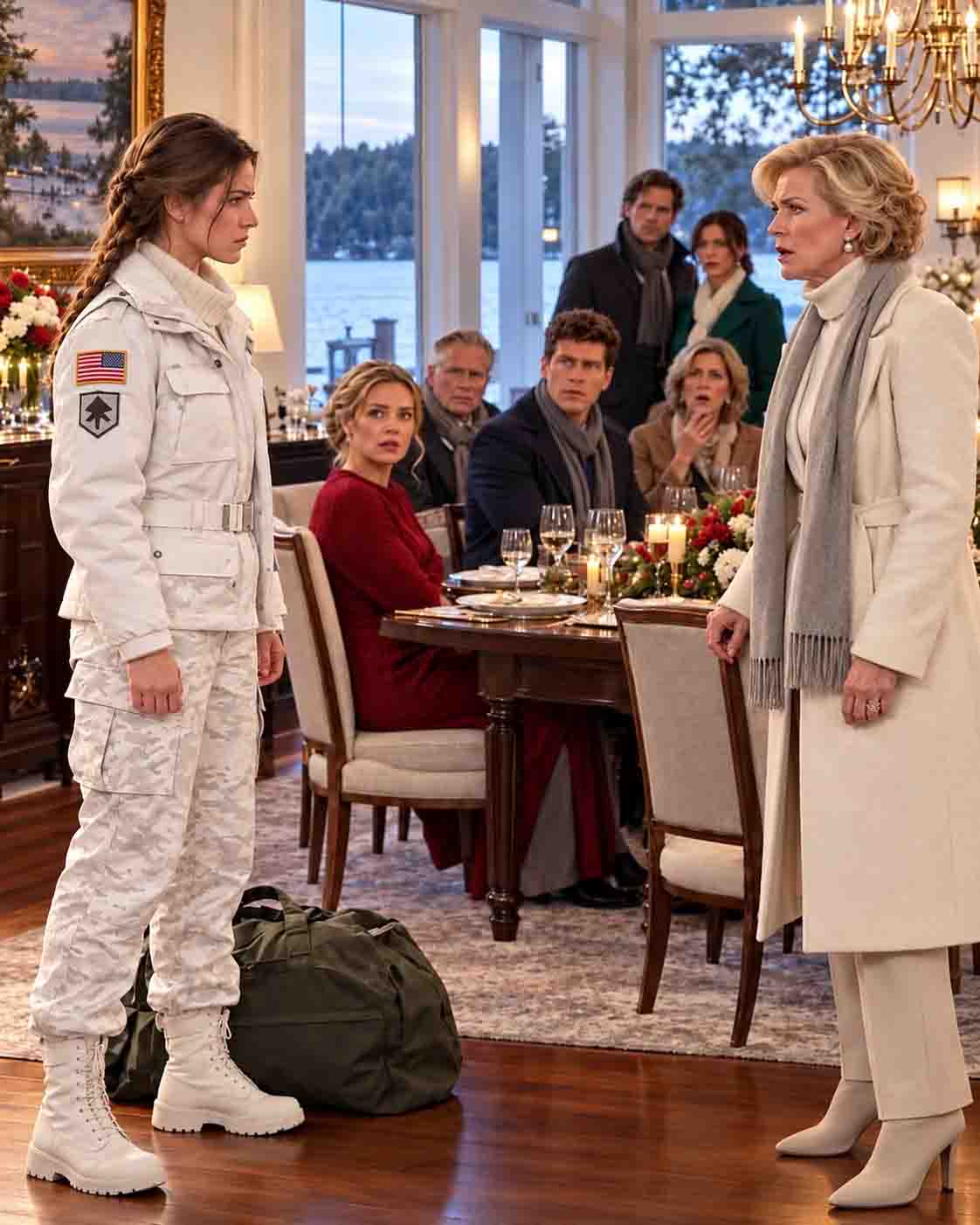
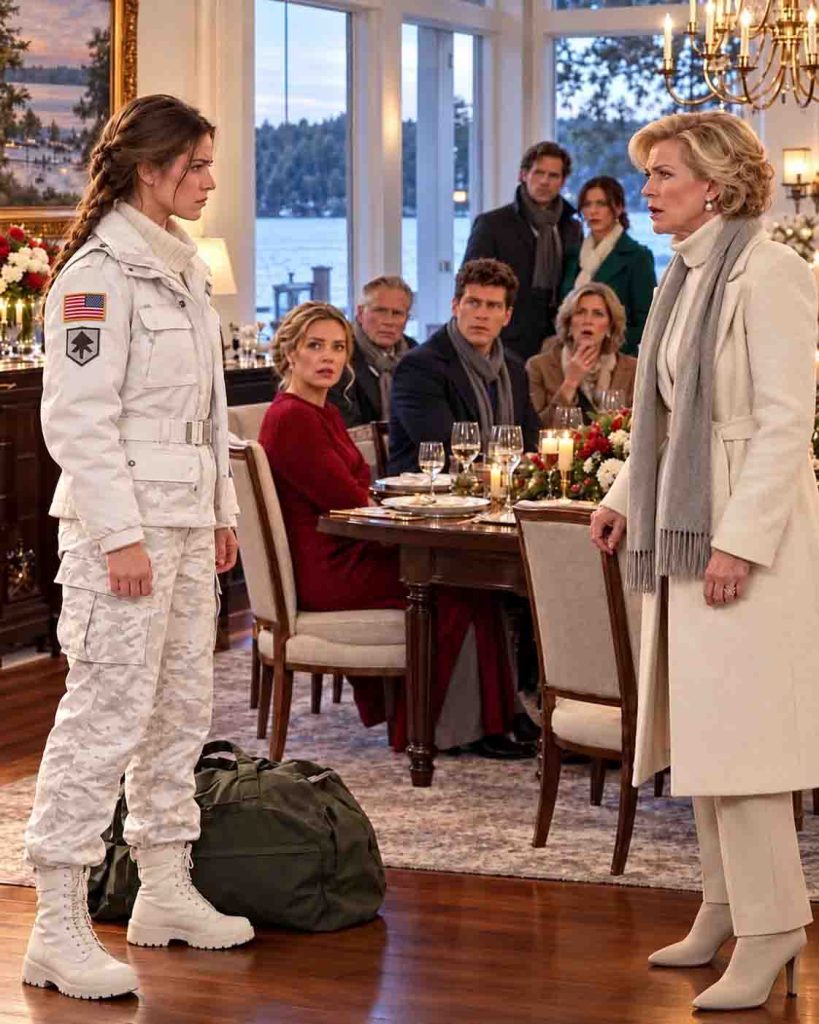
Victor kept his hand on the sealed document for several seconds before letting go.
The cedar box beside it was old, its brass corners dulled by time and use, and a faint scent of cedar rose from the cracked lid.
I stared at the document.
“What is it?”
Victor’s expression softened, but he did not answer immediately.
“It is an amendment to Arthur’s revocable living trust.”
My mouth went dry.
“An amendment?”
“Executed seven months before his death.”
I looked toward the window, where late afternoon rain had turned the street into a blurred ribbon of gray.
“Diane never mentioned one.”
“Diane was not meant to know.”
That answer landed more heavily than I expected.
Arthur had been ill for nearly a year before he died.
During those months, Diane had controlled nearly every visitor, every phone call, and every conversation that took place in his hospital room.
She had called it protection.
She had told me Arthur became confused when he was tired.
She had said legal matters were being handled and that I should concentrate on my military assignment instead of worrying about family business.
I had believed some of it because believing it was easier than admitting how carefully I had been kept away.
Victor slid the document toward me.
“Read the first page.”
My fingers felt strangely unsteady as I opened the folder.
The amendment was twelve pages long, printed on heavy paper and signed in Arthur’s unmistakable handwriting at the bottom of each page.
His signature leaned slightly to the right, as though he were always moving toward the next thought.
I had seen that signature on birthday cards, school forms, and letters he sent to me during deployment.
The name still looked like him.
That nearly made it impossible to continue.
I forced myself to read.
The first paragraphs confirmed what Victor had said.
Arthur had amended the trust on September eighteenth, less than seven months before he died.
The lake house, including all buildings, furnishings, shoreline rights, and adjoining acreage, had been transferred into a separate testamentary trust for my benefit.
I read the sentence twice.
Then a third time.
“Transferred to me?”
Victor nodded.
“As sole beneficiary.”
The office seemed to grow very quiet.
I looked down at the page again.
The property was described in precise legal language, but I saw only one phrase.
Sole beneficiary.
“Does that mean I own it?”
“Eventually, yes.”
“Eventually?”
“Arthur placed it in a protected trust structure rather than giving it to you outright during his lifetime.”
Victor tapped a paragraph near the bottom.
“You are entitled to occupy the property, manage it, and receive all proceeds connected to it.”
He turned another page.
“Upon the completion of the administrative process, legal title passes to you.”
I could hear the rain tapping against the glass.
For years, the lake house had been the center of every important family gathering.
It was where Arthur taught Chloe to swim, where Diane hosted political fundraisers, and where I had spent my first summer after arriving in Virginia.
I remembered Arthur standing barefoot on the dock with a fishing rod balanced across one shoulder.
He had been laughing because I had dropped the tackle box into the lake.
Diane had watched from the porch and complained about the smell of bait on the towels.
Arthur had only smiled and told me that every proper lake house needed one ruined towel and one unforgettable mistake.
I had always assumed the house belonged to the family.
I had never imagined that Arthur had been quietly making it mine.
“What about the rest of the estate?” I asked.
Victor reached for another page.
“The majority of Arthur’s liquid assets, investment accounts, and several commercial properties were placed under the same arrangement.”
I lifted my eyes.
“The majority?”
“Yes.”
“And Diane?”
“She received a limited monthly allowance.”
I felt something twist in my chest.
“Diane was his wife.”
“Arthur knew that.”
“Then why would he leave her an allowance instead of the estate?”
Victor held my gaze.
“Because he believed unrestricted access to the estate would put it at risk.”
I thought of the folder Chloe had pushed toward me that morning.
I thought of Marcus’s company, the missed payments, and the recovery clause hidden in the loan documents.
“Because of the loan?”
“Not only because of the loan.”
He opened the cedar box.
Inside were a fountain pen, three small keys, a stack of folded receipts, and a dark green ledger bound with twine.
Victor lifted the ledger carefully.
“Arthur began keeping these records nearly four years ago.”
I did not touch it.
“What records?”
“Transfers from the family investment accounts.”
He untied the string and opened the ledger to a page filled with dates, account numbers, and handwritten notes.
At first, the entries looked ordinary.
Then I saw the names.
Marcus Holdings.
M. Vance Consulting.
Northfield Equipment.
Several transfers had been made from accounts associated with the family’s charitable foundation.
The amounts were not enormous individually.
Ten thousand dollars here.
Twenty-five thousand there.
Forty thousand described as a temporary bridge.
But the entries continued across page after page.
“How much?” I asked.
Victor turned the ledger toward himself and calculated silently.
“Approximately eight hundred and sixty thousand dollars that we can document.”
I stared at him.
“From the family accounts?”
“From accounts controlled by Diane.”
My first reaction was disbelief.
Diane was difficult, proud, and deeply concerned with appearances, but I had never thought of her as someone who would steal.
Victor closed the ledger.
“Arthur did not initially describe it as theft.”
“What did he call it?”
“An error in judgment.”
That sounded exactly like him.
Arthur had spent his life searching for explanations before assigning blame.
Even when Chloe broke a glass door during a party, he had first asked what had happened before asking who was responsible.
“Did he confront her?”
“Once.”
“And?”
“She told him the money had been used to stabilize Marcus’s company.”
I thought of Marcus’s expression at the dinner table when he had joked about my ability to manage assets.
He had not looked amused.
He had looked afraid.
“Why would Diane do that?”
“According to her, Marcus promised to repay everything once a pending contract closed.”
“Did it?”
“No.”
Victor opened the ledger again.
“Each failed promise was followed by another transfer.”
I felt heat rise behind my eyes.
All morning, Diane had told me I owed the family for taking me in.
She had spoken as though every meal, every school uniform, and every doctor’s appointment had been a debt waiting to be collected.
Meanwhile, she had been moving family money into the business of the man who had just helped pressure me into guaranteeing another four million dollars.
I pressed my fingers against my forehead.
“Did Arthur know Marcus was involved in the new loan?”
“He knew Marcus’s company was in serious trouble.”
“Did he know about the guarantee?”
“Not the specific document.”
Victor’s voice became more careful.
“But he anticipated that they might approach you.”
He reached into the box and removed a folded letter.
The envelope had my name written across the front.
Elena.
The handwriting was Arthur’s.
My breath caught.
“Why didn’t you give me this before?”
“Arthur instructed me to wait until you came here on your own.”
“I came because he told me to.”
“Exactly.”
I turned the envelope over.
The seal had already been broken.
“Did you read it?”
“I witnessed it when he signed the accompanying documents.”
“That isn’t what I asked.”
Victor’s eyes did not leave mine.
“No.”
I believed him.
That was one of the reasons Arthur had trusted him.
I opened the letter.
My hands shook so badly that the paper made a soft, uneven sound.
My dearest Elena,
If you are reading this, then someone has asked you to risk your security for the sake of preserving an image.
Please do not confuse loyalty with surrender.
You have spent much of your life making yourself smaller so that other people could remain comfortable.
I never wanted that for you.
The lake house and the resources connected to it are not a reward for being obedient, grateful, or useful.
They are yours because you helped build the stability that allowed our family to keep them.
You noticed what others ignored.
You saved what others spent.
You asked questions when everyone else preferred appearances.
That is judgment, not charity.
I stopped reading.
For several seconds, the only sound in the office was the rain.
Victor waited without speaking.
I looked down at the letter again.
You may feel guilty when people call your boundaries selfish.
You may doubt yourself when they remind you of what they gave you.
Remember that love is not a ledger, and family is not a debt collection agency.
If you must choose between protecting peace and protecting the truth, choose the truth.
It will cost more at first.
It will leave fewer people pleased with you.
But it will leave you able to recognize yourself.
Always your father,
Arthur.
I lowered the letter into my lap.
A sob rose in my throat, but I swallowed it.
I had cried in airports, in barracks, and once in the locked bathroom of a field hospital after receiving the news that Arthur had taken a turn for the worse.
I had not cried in front of Diane.
I had not cried at his funeral.
I had stood beside the grave in my dress uniform while people described him as a visionary, a benefactor, and a difficult but brilliant businessman.
No one had said that he used to warm my socks on the radiator when I was sick.
No one had mentioned how he cut sandwiches into uneven triangles because he believed perfect symmetry made lunch suspicious.
No one had said that when I was four, he had sat beside my bed for three nights because I was frightened of the dark.
I pressed the letter against my chest.
“He knew,” I whispered.
Victor’s face softened.
“He knew more than you realized.”
“Did he know Diane treated me differently?”
“Yes.”
The word hurt more than I expected.
“Why didn’t he stop her?”
“He tried in ways you may not have seen.”
I shook my head.
“If he knew, why did he let me keep feeling like a guest in my own family?”
Victor leaned back slowly.
“Arthur believed you needed the freedom to become yourself without being defined by a conflict between adults.”
“That sounds noble.”
“It was not always wise.”
I looked at him.
He did not flinch.
“Your father had a blind spot,” Victor continued.
“He believed that if he built something solid enough, the people around him would eventually recognize its value.”
“And they didn’t.”
“Some did.”
“Who?”
“You.”
The answer unsettled me.
I had spent years believing that Arthur loved me despite my difference from the rest of the family.
Now Victor was telling me that Arthur had seen my difference as evidence of strength.
I was not sure how to hold both ideas at once.
“What happens now?” I asked.
“Nothing today.”
I frowned.
“Nothing?”
“You do not sign the loan guarantee.”
“I already refused.”
“Good.”
“You said the property will be mine.”
“It will be, once we complete the formal process.”
“And Diane?”
“She will receive notice through the trustee.”
“Will she contest it?”
“She may.”
“What about Chloe?”
Victor closed the ledger and returned it to the cedar box.
“Chloe’s allowance is also limited.”
“Why?”
“Arthur believed she was too easily influenced.”
I remembered Chloe’s face that morning.
She had looked angry when I refused to sign, but beneath the anger there had been something else.
Fear, perhaps.
Or shame.
“She said the lender needed stronger collateral partners.”
“Did she know the full terms?”
Victor paused.
“That is something you need to determine.”
The answer stayed with me.
Victor placed the keys from the cedar box on the desk.
The smallest key was silver.
The second was brass.
The third was black, with a narrow ridge along its spine.
“What are these for?”
“The silver key opens Arthur’s desk at the lake house.”
I had never seen that desk unlocked.
“The brass key opens a cabinet beneath the stairs.”
“And the black one?”
Victor’s expression changed.
It was not fear.
It was caution.
“That key opens a file drawer in the old boathouse.”
I remembered the boathouse.
It had been closed for years because of a leaking roof and damaged floorboards.
Diane had told everyone it contained nothing but broken fishing equipment.
“What is in the drawer?”
“I do not know.”
I stared at him.
“You don’t know?”
“Arthur never showed me the contents.”
“Then why give me the key?”
“Because he told me it was yours.”
The rain had stopped by the time I left Victor’s office.
The pavement shone beneath the streetlights, and the air smelled of wet stone and leaves.
I sat in my truck with Arthur’s letter on the passenger seat and the three keys in my palm.
For the first time since returning from deployment, I felt as though the ground beneath me had shifted.
I had expected grief.
I had expected arguments.
I had even expected Diane to make another attempt to control the situation.
I had not expected to discover that Arthur had been watching, recording, and preparing for a future in which I would have to stand alone.
Before driving to the lake house, I called Diane.
She answered on the fourth ring.
“Where are you?”
“Out.”
“You should have told me you were leaving Victor’s office.”
“You knew I was going there?”
A silence followed.
Then she said, “Victor has always been dramatic.”
“Did you know Arthur amended the trust?”
Another silence.
This one was longer.
“Arthur changed several documents while he was ill.”
“That wasn’t my question.”
“You are upset.”
“I am asking whether you knew.”
Her breathing sharpened.
“Your father was not always in his right mind near the end.”
“Victor witnessed the amendment.”
“Victor is a lawyer.”
“He said Arthur was clear.”
“Of course he did.”
The familiar tone returned then.
The one that made every fact sound like an insult.
“Do not let Victor fill your head with legal language and turn you against your family.”
“You asked me to sign a four-million-dollar guarantee this morning.”
“We asked you to help.”
“You hid the default notices.”
“We did not hide anything.”
“They were on page fourteen.”
“Because you were not supposed to interpret a financial document without advice.”
“Then why did you bring it to me instead of your own lawyer?”
She did not answer.
I looked at the keys in my hand.
“Did Arthur leave me the lake house?”
Diane’s silence became an answer before she spoke.
“He was confused.”
“That is not an answer.”
“He had been manipulated.”
“By whom?”
“By people who wanted to isolate him.”
I closed my eyes.
“Did you know?”
Her voice lowered.
“You have always wanted to believe you were different from us.”
“I am different from you.”
The words came out quietly.
That seemed to affect her more than shouting would have.
“You are being ungrateful.”
“No.”
I looked through the windshield at the wet road.
“For the first time, I am being accurate.”
I ended the call before she could respond.
The lake house stood dark against the water when I arrived.
No cars were parked near the main entrance.
The guests had left, and the house looked larger without their voices filling it.
I unlocked the front door and stepped inside.
The dining room still carried the faint scent of wine and roasted herbs.
A half-empty crystal glass sat near the place where Marcus had been sitting.
I walked past it.
The silver key opened Arthur’s study.
The room had not changed since his death.
His desk stood near the window, covered with neatly stacked papers and a brass lamp.
A framed photograph of me in uniform rested beside the lamp.
I had never seen it before.
I crossed the room and picked it up.
The photograph had been taken during a ceremony in Kuwait.
I was standing beside two engineers and a row of concrete barriers, wearing a dusty helmet and an expression I remembered as exhaustion.
On the back, Arthur had written one sentence.
She does not know how remarkable she is.
I set the frame down carefully.
Then I unlocked the desk.
Inside the top drawer, beneath a packet of old fountain-pen cartridges, I found a second envelope.
This one was addressed to Victor.
The date on it was three weeks before Arthur’s death.
I opened it because my name appeared in the first sentence.
Victor,
If Elena has come to you, then the pressure has begun.
There are two matters she must understand before she speaks to Diane.
The first is that the money taken from the family accounts did not disappear into Marcus’s company by accident.
The second is that Diane was not the only person who knew where it went.
I stopped reading.
A floorboard creaked in the hallway.
I turned toward the door.
No one stood there.
Then I heard another sound from beneath the house.
A faint metallic click.
The black key rested in my hand.
It had been waiting in the cedar box for years.
And somewhere in the old boathouse, behind a locked drawer Arthur had never explained, someone had left behind the next part of the truth.